English









Every advisor wants happy clients. Clients want steady income and safe growth. This is where a strong bond portfolio strategy for advisors comes in. Bonds are not flashy. However, they build trust. They also protect wealth when markets get shaky.
In this guide, we will walk through the full process. We will cover diversification, fixed income basics, and the bond ladder strategy. Moreover, we will show you how bonds can improve client retention. So, let’s get started.
What Is a Bond Portfolio Strategy for Advisors?
A bond portfolio strategy for advisors is a clear plan. It helps you pick, mix, and manage bonds for your clients. The goal is simple. You want steady income. You also want to protect your client’s money.
This strategy is not just about picking one bond. Instead, it means building a mix. This mix should match your client’s goals. It should also match their risk comfort. Furthermore, it should fit their timeline.
For example, a young client may want growth. Meanwhile, a retired client may want safety. As a result, their bond mix will look very different. This is why a clear strategy matters so much.
Why Bond Portfolio Diversification Matters
Diversification means spreading money across different bonds. This step is critical. Why? Because no single bond is risk-free.
Here’s the thing. If you put all your client’s money in one bond type, risk goes up. However, if you spread it across many types, risk goes down. Similarly, returns become more stable over time.
Besides risk control, diversification also smooths out returns. Some bonds do well when interest rates fall. Others do well when rates rise. Therefore, a mixed portfolio balances these swings.
In addition, diversification protects against default risk. If one bond issuer struggles, the rest of the portfolio stays safe. This is a key reason why bond portfolio diversification remains a core rule for every advisor.
How to Assess a Client’s Fixed Income Needs
Before you pick any bond, you must understand your client. This step comes first. Ask simple questions. What is their goal? Is it income, safety, or growth? Also, ask about their timeline. Do they need money in two years or twenty?
Next, check their risk tolerance. Some clients panic when prices dip. Others stay calm. Knowing this helps you choose the right fixed income mix.
Moreover, look at their current portfolio. Do they already hold stocks or real estate? If so, bonds can balance that risk. As mentioned earlier, the goal is always balance, not just returns.
Finally, review their tax situation. Some bonds offer tax benefits. This detail can change your whole plan. So, always ask before you act.
Types of Bonds to Consider for Client Portfolios
There are many bond types. Each one serves a different purpose. Below is a simple table to help you compare them.
| Bond Type | Risk Level | Typical Use Case |
| Government Bonds | Low | Safety and capital protection |
| Corporate Bonds | Medium | Higher income with moderate risk |
| Municipal Bonds | Low to Medium | Tax benefits for certain clients |
| High-Yield Bonds | High | Growth-focused clients with risk appetite |
| Inflation-Linked Bonds | Low to Medium | Protection against rising prices |
As you can see, each bond type fits a different client need. Therefore, mixing them is often the smartest move. Additionally, this table can act as a quick reference during client meetings.
Bond Ladder Strategy: How It Works
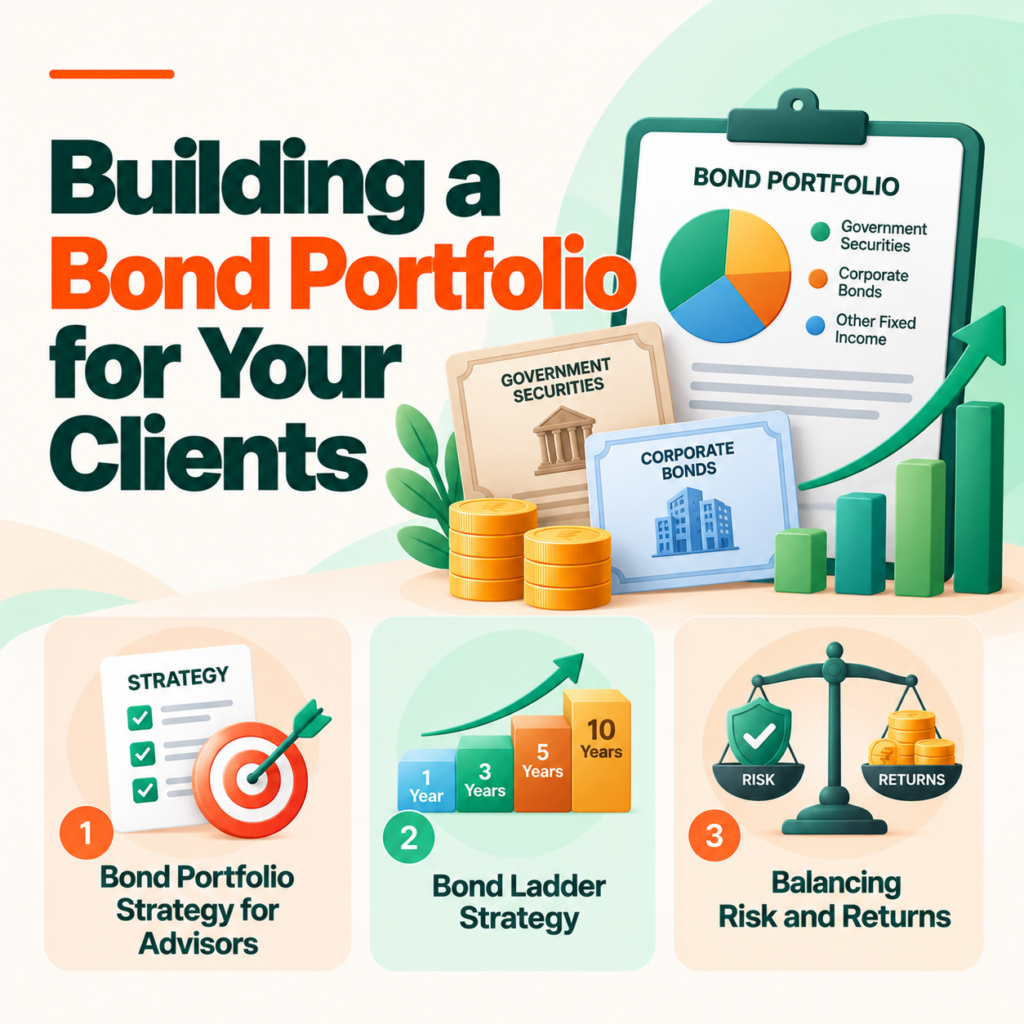
The bond ladder strategy is a popular and simple method. It works like this. You buy bonds that mature at different times. For example, one bond matures in one year. Another matures in three years. A third matures in five years.
This way, some money becomes available every year. Meanwhile, the rest keeps earning interest. As each bond matures, you can reinvest it. This keeps the ladder going.
Why does this help? First, it reduces interest rate risk. Second, it gives clients regular access to cash. Besides that, it removes the stress of guessing where rates will go next.
In short, the bond ladder strategy gives structure and flexibility. This is why many advisors use it as their go-to fixed income tool.
How to Build a Diversified Bond Portfolio
Building a diversified bond portfolio takes a few clear steps. First, set the client’s goal. Is it income, safety, or a mix of both?
Second, choose bond types. Use a blend of government, corporate, and municipal bonds. This spreads out risk. Third, apply the bond ladder strategy within this mix. This adds another layer of safety.
Fourth, check bond ratings. Higher-rated bonds are safer. Lower-rated bonds pay more but carry more risk. Balance both based on the client’s comfort level.
Finally, review the plan every few months. Markets change. Client needs change too. So, your bond portfolio should never stay static. Instead, treat it as a living plan that grows with your client.
Matching Bond Tenure With Client Goals
Tenure means how long a bond takes to mature. This detail matters a lot. Why? Because it must match the client’s timeline.
For instance, if a client needs funds in two years, avoid long-term bonds. Instead, pick short-term bonds. On the other hand, if a client is saving for retirement in twenty years, longer bonds can work well.
Furthermore, mixing tenures reduces risk. Short-term bonds offer quick access to cash. Long-term bonds often pay higher interest. Therefore, blending both gives clients the best of both worlds.
Always ask about upcoming life events too. A wedding, a home purchase, or college fees can all affect the right bond tenure. Keep this in mind during every review.
Balancing Risk and Returns in a Bond Portfolio
Every bond carries some risk. However, risk and return usually move together. Higher returns often mean higher risk. Lower risk usually means lower returns.
So, how do you balance this? Start by understanding your client’s comfort level. Some clients accept small dips for higher gains. Others want zero surprises.
Once you know this, mix your bonds accordingly. For example, combine safe government bonds with a smaller share of high-yield bonds. This way, the portfolio stays balanced.
Also, remember that balance is not a one-time task. Markets shift. Client needs shift too. Because of this, regular check-ins help keep the risk-return balance in line.
How Advisors Can Monitor and Rebalance Bond Portfolios
A bond portfolio is not something you build once and forget. Instead, it needs regular attention. Monitoring means checking interest rates, bond prices, and client goals.
Rebalancing means adjusting the mix when something changes. For example, if interest rates rise sharply, some bonds may lose value. In that case, you may need to shift the mix.
Similarly, if a client’s goals change, their bond portfolio should change too. Perhaps they now need more income. Or perhaps they want lower risk. Either way, rebalancing keeps the plan aligned.
A simple rule is to review every quarter. This keeps things fresh. It also shows clients that you are actively managing their money. As a result, trust grows over time.
Using Bond Portfolios to Improve Client Retention
Client retention is the backbone of a successful advisory business. Bonds can play a big role here. Why? Because they offer stability. Clients feel safe when they see steady, predictable returns.
Moreover, regular portfolio reviews create more touchpoints with clients. Every review is a chance to build trust. It also shows clients that you care about their long-term goals.
In addition, a well-planned bond ladder gives clients a sense of control. They can see when funds become available. This transparency builds confidence.
Besides that, clients who trust your fixed income advice often refer others. Therefore, a strong bond strategy does more than protect money. It also grows your business through better client retention.
Common Bond Portfolio Mistakes to Avoid
Even experienced advisors make mistakes. Here are some common ones to avoid.
First, ignoring diversification. Putting too much money into one bond type raises risk. Second, ignoring tenure matching. This can leave clients without cash when they need it most.
Third, skipping regular reviews. Markets change constantly. Without reviews, a portfolio can drift away from a client’s goals. Fourth, chasing high yields without checking risk. This often leads to painful surprises later.
Finally, poor communication. Clients want to understand their portfolio. If you skip clear explanations, trust can fade. So, always explain your choices in simple terms.
Conclusion
A strong bond portfolio strategy for advisors is not complicated. It simply needs a clear process. Start by understanding your client’s goals. Then, diversify across bond types. Use the bond ladder strategy for flexibility. Balance risk and return carefully. Finally, review and rebalance often. To become a loan agent or to sell Bonds, & to earn more, join WeRize & start your DSA journey. Start small, stay patient, and grow steadily.
By following these steps, you protect your client’s money. You also build lasting trust. As a result, your client retention grows stronger over time. In short, good bond planning is good business.