English


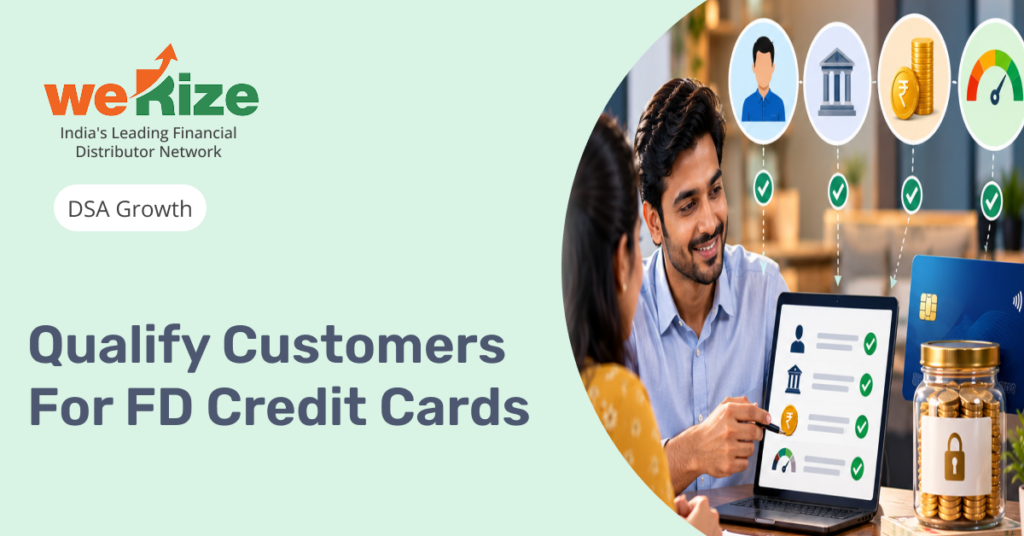



Many people want a credit card but cannot get one. They may be new to credit. Some may have no salary slip. Others may have a low score. An FD-backed credit card solves this problem for them.
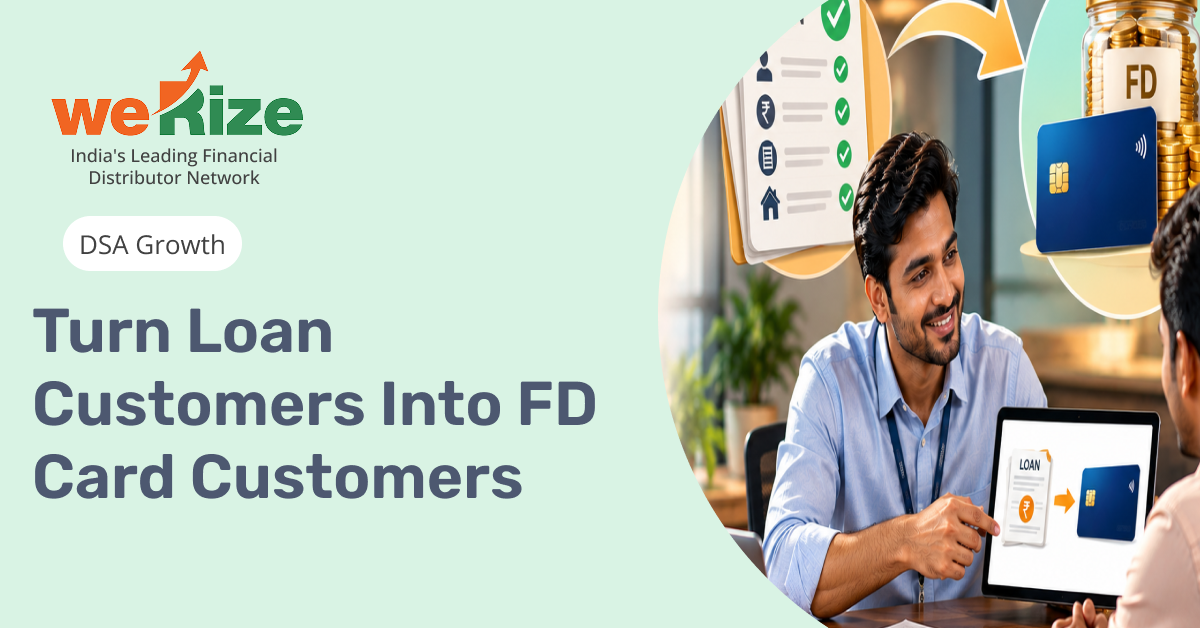
The card is simple. The customer keeps money in a fixed deposit. The bank then gives a card against that deposit. As a result, the bank takes very little risk.
However, not every customer qualifies. That is why agents must know FD-backed credit card eligibility well. Moreover, a good check saves time for both sides. In this guide, we explain the minimum FD amount, credit card requirements, and customer qualification steps in plain words. Let us begin.
What Is an FD-Backed Credit Card?
An FD-backed credit card is a secured credit card. The bank uses your fixed deposit as security. You do not need to break the FD. The bank simply places a lien on it.
Here is how it works. You open an FD with a bank. Then you apply for the card. The bank sets a credit limit based on your FD value. You use the card like any other card. You shop, pay bills, and book tickets.
Besides that, you pay your bills on time. This builds a good credit record. Therefore, many first-time users choose this card as a starting point.
What Is FD-Backed Credit Card Eligibility?
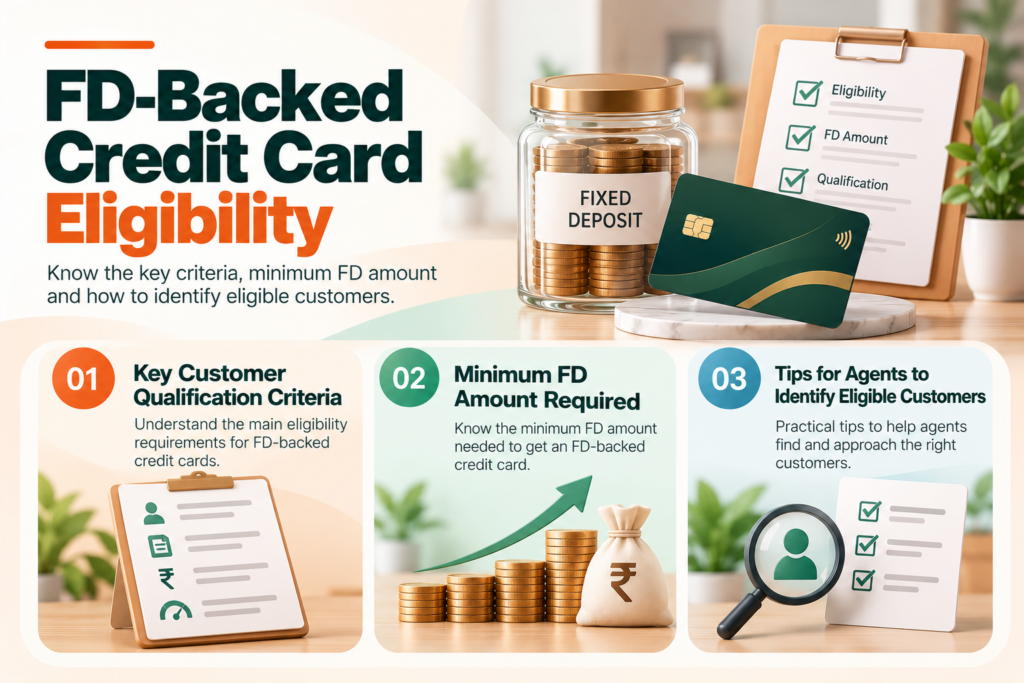
FD-backed credit card eligibility means the rules a customer must meet to get the card. Every bank sets its own rules. Still, most banks check the same basic things.
Firstly, the customer needs a valid FD. Secondly, the customer must be of legal age. Similarly, the customer must pass the KYC check. Finally, the FD must be active and free of other claims.
Compared with unsecured cards, these rules are light. For example, many banks do not ask for income proof. This makes the card open to more people.
Minimum FD Amount Required for an FD-Backed Credit Card
The minimum FD amount is the smallest deposit a bank accepts for the card. It differs from bank to bank. Some banks start at a few thousand rupees. Others ask for a higher amount.
Meanwhile, some banks also set a minimum tenure for the FD. For instance, an FD of six months or more may be needed. Always check the latest bank policy before you tell a customer anything.
Here is a simple example. Please note that these figures are only for understanding. Real numbers depend on the bank.
| FD Amount | Sample Credit Limit (at 80%) | Note |
| ₹10,000 | ₹8,000 | Small starter limit |
| ₹25,000 | ₹20,000 | Good for daily spends |
| ₹50,000 | ₹40,000 | Fits regular use |
| ₹1,00,000 | ₹80,000 | Suits higher spends |
As mentioned earlier, each bank sets its own rules. Hence, agents must confirm the exact amount and limit before they share it.
FD-Backed Credit Card Requirements
Credit card requirements for this card are easy to follow. Let us look at the main ones.
- An active FD: The FD must be open in the bank that issues the card, or in a partner bank.
- Lien on the FD: The customer must agree to a lien on the deposit.
- KYC done: The customer needs valid ID and address proof.
- Age limit: Most banks ask for a minimum age of 18 years.
- Residency: Most cards are for resident Indians.
Moreover, some banks ask for a minimum tenure or a set FD type. In addition, the FD should not be pledged elsewhere. Therefore, agents should check these points early.
Key Customer Qualification Criteria
Customer qualification is the process of checking if a person fits the card rules. It helps you avoid wrong leads. Further, it improves approval rates.
Use this quick checklist:
- FD status: Is the FD active and in the customer’s own name?
- FD value: Does it meet the minimum FD amount?
- KYC status: Are the documents valid and clear?
- Age: Is the customer above the age limit?
- Intent: Does the customer want the card for real use?
Besides these, some banks may look at the credit report. However, the FD lowers the risk. So, the bar is often lower than for normal cards.
Who Can Apply for an FD-Backed Credit Card?
Many types of people can apply. Let us see who fits best.
- First-time card users: They have no card history. Hence, this card is a safe start.
- Students and young adults: They may have savings but no income proof. Similarly, their family may help them open an FD.
- Self-employed people: They may lack formal income papers. Meanwhile, they may hold an FD.
- People rebuilding credit: A past delay may have hurt their score. Therefore, this card helps them recover.
- Retired people: They often keep FDs. In addition, they may want a simple card for bills.
Joint FD holders may also apply in some cases. Still, the bank may ask for consent from all holders.
Documents Required for an FD-Backed Credit Card
The paperwork is light. Most banks ask for the following.
| Document Type | Examples |
| Identity proof | PAN card, Aadhaar, passport |
| Address proof | Aadhaar, utility bill, passport |
| FD proof | FD receipt or account details |
| Photograph | Recent passport-size photo |
| Application form | Filled and signed form |
Moreover, some banks ask for a signed lien consent. Likewise, some may ask for a cancelled cheque. Agents should share the full list at the start. As a result, customers avoid delays.
How to Qualify Customers for FD-Backed Credit Cards
Now let us go step by step. This process keeps your work clear and fast.
Step 1: Start with a short chat. Ask why the customer wants a card. Then ask if they hold an FD.
Step 2: Check the FD. Confirm the amount, the tenure, and the holder’s name. Besides, confirm that no other lien exists on it.
Step 3: Match the minimum FD amount. Compare the FD value with the bank’s rule. If it falls short, suggest a top-up.
Step 4: Verify KYC. Check the ID and address proof. Further, make sure the names match on all papers.
Step 5: Explain the credit limit. Tell the customer how the limit links to the FD. Also, explain that the limit is a share of the FD.
Step 6: Share fees and terms. Explain annual fees, interest, and late charges. In fact, this step builds trust.
Step 7: Submit the application. Finally, help the customer file the form and track it.
Thus, a clear process leads to fewer rejections.
How FD Amount Affects the Credit Limit
The credit limit depends on the FD value. Most banks give a limit that is a set share of the deposit. Often, this share is between 75% and 90%. It varies by bank.
So, a bigger FD gives a bigger limit. For example, an FD of ₹1,00,000 at 80% gives a limit of ₹80,000. Similarly, an FD of ₹20,000 gives ₹16,000.
Moreover, the limit may grow over time. If the customer adds to the FD, the bank may raise the limit. Meanwhile, good payment habits can help the customer move to a regular card later.
Please remember this point. If the customer misses payments for a long time, the bank can adjust the FD to recover dues. Therefore, agents must explain this risk clearly.
Can Customers With No Credit History Get an FD-Backed Credit Card?
Yes, they can. In fact, this is the top reason people choose this card.
A normal card needs a credit record. A new customer has none. Hence, banks feel unsure. However, the FD gives the bank strong cover. Because of this, the bank can say yes.
Besides that, the card helps the customer build a score. Each on-time payment adds to the record. Further, low card use keeps the score healthy. As a result, the customer may later qualify for an unsecured card.
Common Reasons Customers May Not Qualify
Even with an FD, some customers get rejected. Here are the common reasons.
- FD amount is too low: It does not meet the minimum FD amount.
- FD is not active: It may have matured or been closed.
- Lien already exists: The FD backs another loan.
- KYC mismatch: Names or addresses differ across papers.
- Under the age limit: The customer is younger than the bank allows.
- Wrong FD type: Some banks do not accept certain FDs.
- Missing documents: The file stays incomplete.
Moreover, a very poor repayment record may also cause trouble at some banks. Still, most issues are easy to fix. Therefore, check them before you apply.
Tips for Agents to Identify Eligible Customers
Good agents spot fit customers fast. Try these tips.
- Ask the right questions early. For example, ask “Do you hold an FD?” in the first call.
- Look for FD holders. Retired people, savers, and small business owners often have FDs.
- Target new-to-credit users. Students and young workers want a first card.
- Explain the benefits simply. Mention easy approval and credit building.
- Keep a checklist handy. As mentioned earlier, a checklist saves time.
- Follow up on time. Meanwhile, keep the customer informed about progress.
Besides this, listen well. Customers share clues about their needs. Consequently, you can match them with the right offer.
Common Mistakes to Avoid When Qualifying Customers
Small mistakes can cost you leads. Avoid these.
- Promising fixed limits. Limits differ by bank. So, never promise a number.
- Skipping the lien explanation. Customers must know the FD stays locked.
- Ignoring the fee details. Hidden charges upset customers later.
- Not checking the FD name. The FD must match the applicant.
- Rushing the KYC. Errors here cause rejections.
- Forgetting to explain risk. Missed payments can affect the FD.
Likewise, avoid pushing customers who do not need the card. Otherwise, they may not use it well. In short, honest talk builds long-term trust.
Conclusion
FD-backed credit card eligibility is simple once you know the basics. The customer needs an active FD, valid KYC, and the right age. Moreover, the FD must meet the minimum FD amount. Besides, the credit limit depends on the deposit value.
Agents who follow a clear process can qualify customers with ease. Further, they can avoid common errors and reduce rejections. As a result, customers get the right card, and agents build trust. To become a loan agent, sell RDs, FDs & FD credit cards, & to earn more, join WeRize & start your DSA journey. Start small, stay patient, and grow steadily.
So, use the checklist and the steps above. Check the latest bank rules each time. Then guide your customers with care.