English




Getting your first credit card feels exciting. However, most people do not know what to do next. If you want to build your credit score fast, your first card is actually your biggest tool. Moreover, the habits you build now will shape your credit score for years.
This guide breaks down simple, practical first credit card tips. Furthermore, you do not need financial jargon to understand this blog. We will walk you through every step in plain language, so you can start building a healthy credit score today.
What Does It Mean to Build Your Credit Score?
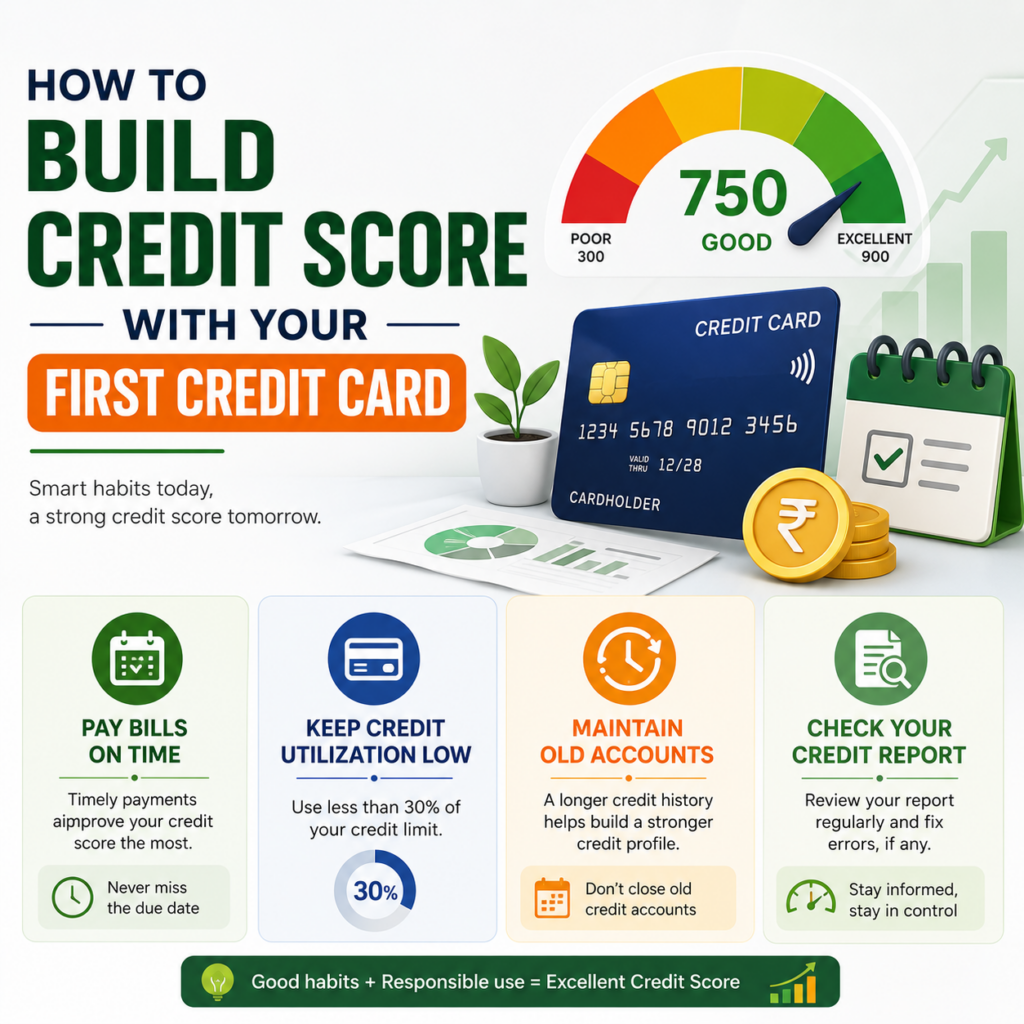
Your credit score is a three-digit number. It tells lenders how well you manage borrowed money. Generally, this score ranges between 300 and 900. A higher score means better chances of loan approval. Meanwhile, a low score can make borrowing harder and costlier.
Building your credit score simply means creating a track record of responsible borrowing. Essentially, it shows lenders that you repay on time and do not overspend. As a result, banks trust you more with bigger loans and better interest rates. Besides, a strong score also helps you get premium credit cards in the future.
In short, building your score is not a one-time task. Instead, it is an ongoing habit. Similarly, it grows stronger with every responsible action you take.
How Does Your First Credit Card Affect Your Credit Score?
Your first credit card plays a major role in shaping your credit journey. Indeed, it is often the very first entry in your credit report. Therefore, how you use it sets the tone for your entire credit history.
When you get a new card, the credit bureau starts tracking your behaviour. For instance, it notes your payment dates, your spending patterns, and your credit limit usage. Consequently, every bill you pay on time adds a positive mark to your report. On the other hand, missed payments or high spending can hurt your score quickly.
Additionally, your first card also affects your “credit age.” This refers to how long you have held credit accounts. Since older accounts generally help your score, it makes sense to keep your first card active for a long time. Similarly, closing it too early can shorten your credit history and lower your score.
How to Build Credit Score Fast With Your First Credit Card
Now, let us look at the exact steps that help you build your credit score fast. Each step is simple, and you can start today.
Pay Your Credit Card Bills on Time
This is, without doubt, the most important step. Your payment history impacts a large portion of your credit score. Therefore, always pay your full bill before the due date. Even one missed payment can lower your score significantly.
Furthermore, setting up auto-pay or bill reminders can help you avoid missing dates. Besides, timely payments also help you avoid late fees and extra interest charges.
Keep Your Credit Utilisation Low
Credit utilisation means how much of your credit limit you are using. Generally, experts suggest keeping this below 30%. For example, if your limit is Rs. 50,000, try to spend under Rs. 15,000 each month.
Moreover, low utilisation shows lenders that you do not depend heavily on borrowed money. As a result, it reflects positively on your credit report. Meanwhile, high utilisation can signal financial stress, even if you pay your bill on time.
Avoid Maxing Out Your Credit Limit
Maxing out your card means using your entire credit limit. This habit can hurt your score fast, even with timely payments. Instead, try to spread your spending across the month. Similarly, avoid using your card for very large, one-time purchases unless necessary.
Use Your Credit Card Regularly and Responsibly
Interestingly, not using your card at all can also slow down your credit building. Therefore, use your card for small, regular purchases like groceries or bills. However, always keep your spending within your budget.
Besides, regular usage gives the credit bureau more data to evaluate your habits. Consequently, this helps build a stronger and more reliable credit profile over time.
Pay More Than the Minimum Amount Due
Paying only the minimum amount due might seem convenient. However, it leads to high interest charges on your remaining balance. Furthermore, it increases your utilisation ratio, which can hurt your score.
Instead, try to pay your full outstanding balance every month. If that is not possible, pay as much as you can above the minimum amount. This way, you reduce debt faster and protect your credit score.
Avoid Applying for Multiple Credit Cards
When you apply for a new credit card, the lender performs a hard inquiry on your credit report. Too many hard inquiries within a short time can lower your score. Therefore, avoid applying for multiple cards at once.
Instead, focus on building a strong history with your first card. Once you see consistent improvement, you can consider applying for additional cards later.
Check Your Credit Report Regularly
Many people forget to check their credit report until they need a loan. However, regular checks help you spot errors early. For instance, incorrect entries or fraudulent transactions can lower your score unfairly.
Therefore, review your credit report every few months. Besides, this habit also helps you track your progress and stay motivated.
Common Mistakes to Avoid With Your First Credit Card
Even well-meaning cardholders make mistakes that slow down their credit building. Here are some common ones to avoid:
- Missing payment due dates
- Spending beyond your budget
- Ignoring your monthly statements
- Closing your first card too early
- Applying for too many cards at once
- Making only minimum payments regularly
Avoiding these mistakes can significantly speed up your credit-building journey. Similarly, staying aware of your spending habits helps you stay in control.
First Credit Card Tips to Build a Healthy Credit History
Besides the steps mentioned above, here are a few extra first credit card tips worth following:
| Habit | Why It Helps |
| Set up auto-pay | Prevents missed due dates |
| Track monthly spending | Keeps utilisation low |
| Avoid unnecessary EMIs on card | Reduces long-term debt burden |
| Keep the card active | Builds longer credit history |
| Review statements monthly | Helps catch errors early |
| Avoid cash withdrawals on card | Prevents high interest charges |
As mentioned earlier, small habits create big results over time. Therefore, following this table consistently can help you build a strong credit foundation.
How Long Does It Take to Build a Good Credit Score?
Generally, building a good credit score takes time. Most people notice visible improvement within six to twelve months of consistent, responsible card usage. However, this timeline can vary based on your spending habits and repayment discipline.
Meanwhile, some users may need longer, especially if they missed payments earlier or have limited credit history. Nevertheless, patience and consistency remain key. Similarly, avoiding shortcuts or risky borrowing habits protects your progress in the long run.
It is worth noting that credit score calculations and timelines can vary across credit bureaus and lenders. Therefore, treat these timeframes as general guidance rather than a guarantee.
Conclusion
Building your credit score fast is not about doing something extraordinary. Instead, it is about following simple, consistent habits with your first credit card. Pay on time, keep your utilisation low, and avoid unnecessary risks. Furthermore, checking your credit report regularly keeps you informed and in control.
As mentioned throughout this blog, small and steady actions matter the most. Similarly, patience plays a big role in this journey. Over time, these habits will help you build a strong, healthy credit score that opens doors to better financial opportunities.