English





Getting your first credit card can feel hard. Many people think your credit score is all that matters. But that is not fully true. Banks also check your papers closely. In fact, the right papers can make up for a low or missing credit score. So, before you apply, it helps to know what you need. This guide covers the credit card documents required for new users. It also gives you a simple credit card application checklist. As a result, you can apply with confidence and avoid delays.
Can You Get a Credit Card Without a Credit Score?
Yes, you can get a credit card even with no credit score. Many young workers and students fall into this group. Banks know that everyone has to start somewhere. So, they offer special cards for new users. For example, secured cards and FD-backed cards are common choices. Likewise, some banks give cards based on your salary or bank balance alone. So, a low or missing score does not always mean “no.” Instead, it just means the bank will trust your papers more. Because of this, having the right documents matters even more.
Credit Card Documents Required for First-Time Applicants
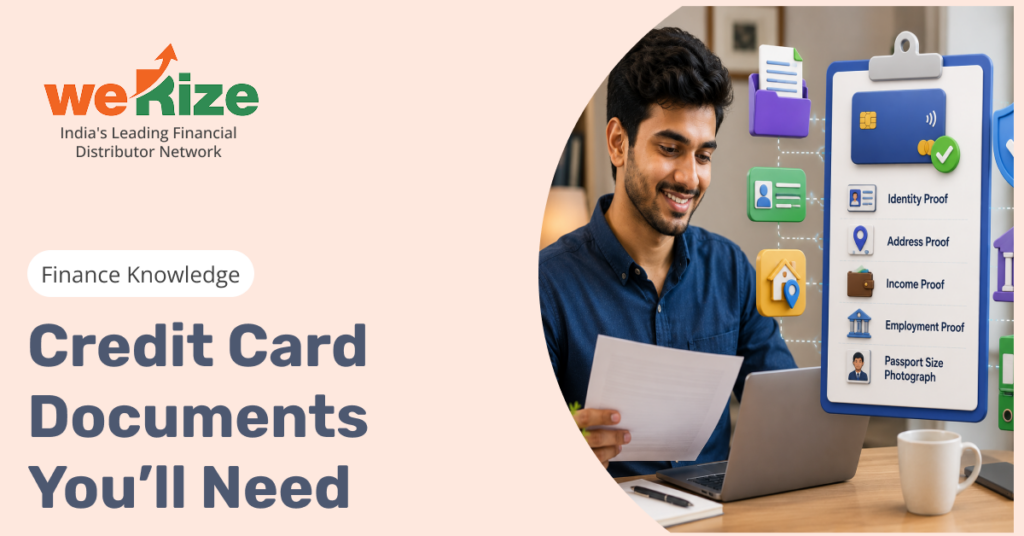
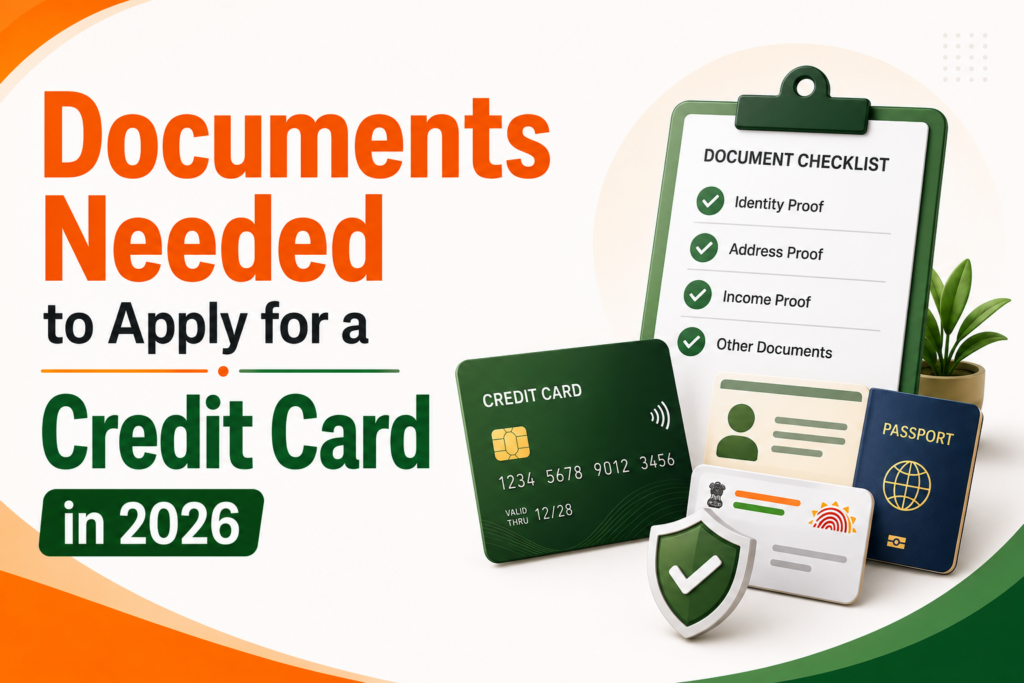
First-time users mostly need four types of papers. These are ID proof, address proof, income proof, and a photo. Some banks also ask for bank statements. Students or those with no income may need a parent’s papers too. As said above, banks lean on paperwork more when you have no credit history. So, keeping these papers ready ahead of time saves you effort. It also lowers the chance that your form gets turned down. Next, let’s look at each type of paper in more detail.
Identity Proof Required for a Credit Card Application
ID proof shows who you are. Most banks accept these papers for this step:
- Aadhaar card
- PAN card
- Passport
- Voter ID card
- Driving licence
The PAN card is almost always a must. This is because it links your money records across banks. Aadhaar is also widely used for quick, paperless checks. So, keep both your PAN and Aadhaar ready as a first step. Also, make sure your name is spelled the same way on both. If not, the bank may ask for more checks. This can slow down your approval.
Address Proof Required for a Credit Card Application
Address proof shows where you live now. Banks use this to mail your card and bills. Common papers include:
- Aadhaar card
- Passport
- Utility bills (power or water, usually not older than 3 months)
- Rent agreement
- Bank passbook with your address printed on it
If you moved homes lately, your old address proof may not work. So, it helps to update your Aadhaar address first. Some banks also accept a signed self-declaration with a backup paper. But this option is not offered everywhere. So, check with your bank first.
Income Documents Required for a Credit Card
Income proof matters a lot when you have no credit score. This is because it shows the bank you can repay. For salaried people, banks usually ask for:
- Salary slips (last 3 months)
- Form 16 or tax returns
- Bank statements that show your salary coming in
For those who run their own business, the list is a bit different:
- Tax returns (last 2 years)
- Business proof or registration papers
- Profit and loss statement, if you have one
Students or homemakers with no steady income can still apply. In these cases, banks may look at a parent’s or spouse’s income instead. Because of this, the card often comes as an add-on or a secured card. Either way, income papers are a key part of the credit card documents required.
Bank Statements and Other Financial Documents
Bank statements give the bank a clear view of your money habits. Banks usually ask for the last 3 to 6 months. A steady, healthy balance can boost your chance of approval. Along with bank statements, some banks may also ask for:
- Fixed deposit receipts
- Proof of savings or investments
- Statements for any loans you already have
These papers help the bank judge your full money picture. In short, the stronger your papers look, the better your chances get.
Credit Card Application Checklist
Use this simple credit card application checklist before you apply. It brings together everything shared above in one place.
| Document Type | Examples | Mandatory? |
| Identity Proof | PAN card, Aadhaar, Passport | Yes |
| Address Proof | Aadhaar, Utility bill, Rent agreement | Yes |
| Income Proof | Salary slips, Tax returns, Form 16 | Usually Yes |
| Bank Statements | Last 3–6 months | Often Required |
| Photograph | Recent passport-size photo | Yes |
| FD Receipt (if needed) | Fixed deposit certificate | Only for Secured Cards |
This checklist covers most first-time applications. Still, always check the exact list with your own bank. This is because rules can change slightly from bank to bank.
Documents Required for a Secured or FD-Backed Credit Card
Secured cards work in a different way. Instead of a credit score, the bank uses your fixed deposit as backup. So, the papers needed are a bit different too. Mostly, you will need:
- Identity proof
- Address proof
- Fixed deposit receipt or FD proof
- A filled application form
Some banks even let you open the FD and apply for the card at the same time. This makes the process faster and easier. Meanwhile, your credit limit is usually 80-90% of your FD amount. So, a bigger FD often means a bigger limit. This is why secured cards are a popular pick for those with no credit score.
How to Prepare Your Documents Before Applying
Getting your papers ready early makes the whole process smoother. First, collect both paper and digital copies of every document. Next, check that your name, address, and photo match across all papers. Then, scan your papers clearly if you plan to apply online. Also, keep your PAN and Aadhaar linked, as this speeds up checks. Make sure your phone number is linked to Aadhaar too, for OTP checks. Keep your income papers fresh, mainly if you changed jobs lately. This way, you skip last-minute stress during the application. Also, check file size and format if you upload papers on a bank’s website.
Common Document-Related Mistakes to Avoid
Many forms get delayed by small, easy-to-avoid slip-ups. For instance, names that don’t match across papers are a common issue. Old address proof also often leads to rejection. Blurry or unclear scans can slow things down too. Some people forget to sign the form. Others send in expired papers, like an old passport or licence. So, always check expiry dates before you submit anything. Also, don’t use your home address if your Aadhaar shows a different one. Instead, update your details first, then send in your form. In short, small care with details stops most common problems.
What to Do If You Do Not Have All the Required Documents
At times, you may not have every paper ready. If so, don’t worry. First, check if your bank takes other kinds of papers instead. For example, a passport can often cover both ID and address proof. Likewise, an Aadhaar card alone can often cover both needs too. If you lack income proof, try a secured or FD-backed card instead. You can also become an add-on user on a family member’s card. Or, you can start with a low-limit card and build your record over time. So, missing a few papers today does not mean no card at all.
Conclusion
In short, you can get a credit card even with no credit score. The key is having the right papers ready. As we saw above, ID proof, address proof, income proof, and bank statements form the core list. Secured and FD-backed cards also offer a safe path for new users. So, use the credit card application checklist in this guide before you apply. This way, you save time and boost your chance of approval. In the end, good prep now leads to a smoother money journey ahead.