English


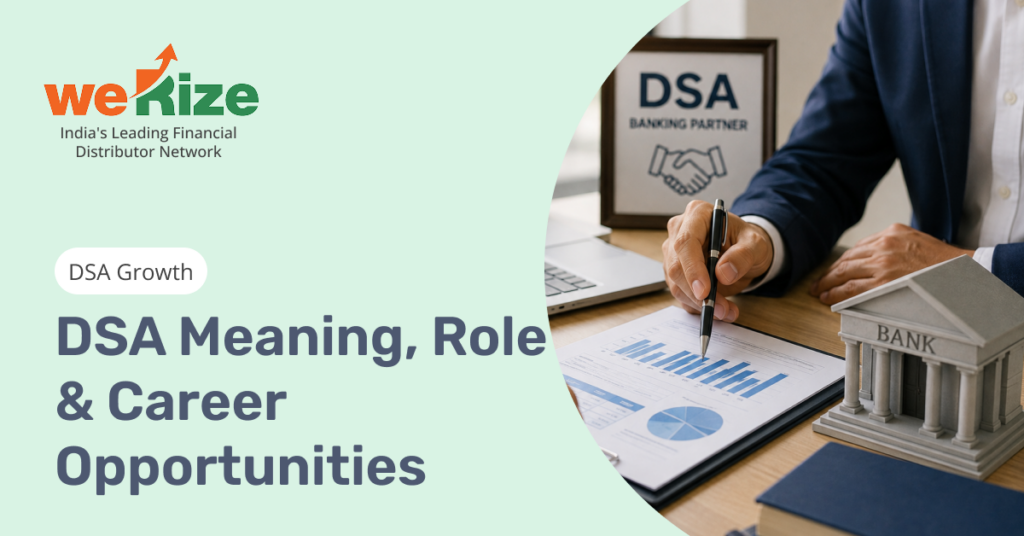






Have you ever heard the term DSA and wondered what it means? You are not alone. Many people come across this word while applying for a loan or a credit card. Banks and lenders use DSAs to reach more customers. Similarly, many individuals use this role to build a career in finance without a big investment. In this blog, we will explain the DSA full form in banking, its meaning, and its role in simple words. Moreover, we will also cover the career scope so you can decide if this path suits you. So, let us begin.
What is the DSA Full Form in Banking?
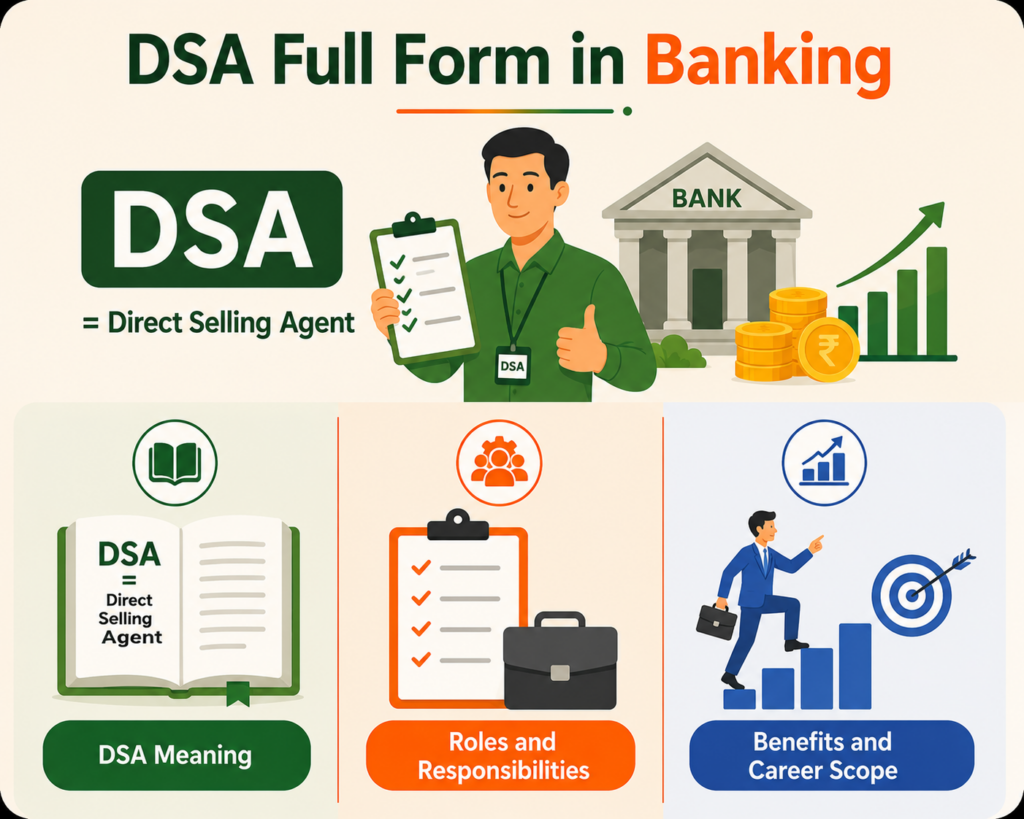
The DSA full form in banking is Direct Selling Agent. This term is common in the banking and finance world. A DSA is a person or a firm that sells financial products on behalf of a bank or a lender. Furthermore, a DSA does not work as a direct employee of the bank. Instead, they work as a partner who earns a commission for every successful sale. This model helps banks grow their business. Besides, it also gives many people a chance to earn money by connecting customers with the right loan or product.
What is DSA Meaning in Banking?
Now that you know the full form, let us understand the DSA meaning in banking in more depth. A DSA acts as a bridge between the customer and the bank. In other words, a DSA finds people who need a loan, a credit card, or another financial product. Then, the DSA helps them complete the application process. As mentioned earlier, this is not a salaried job. Instead, it works on a commission basis. Therefore, the more successful deals a DSA closes, the more they earn. This system benefits both the bank and the agent.
What Does a DSA Do in Banking?
A DSA plays many roles in the loan and banking process. First, they find people who may need a financial product. Next, they explain the product features in a simple way. After that, they help the customer fill out the application form. Meanwhile, they also collect the required documents, such as ID proof, income proof, and address proof. Once this is done, the DSA sends the file to the bank for approval. In short, a DSA makes the loan process easier for both the customer and the bank.
Role and Responsibilities of a DSA
The role of a DSA involves several important tasks. Below are some of the main responsibilities:
- Lead generation: A DSA looks for potential customers who need a loan or a credit card.
- Customer guidance: They explain product details, interest rates, and terms clearly.
- Document collection: A DSA gathers and checks all the needed paperwork.
- Application support: They help customers complete forms without errors.
- Follow-up: A DSA tracks the application until it is approved or rejected.
- Compliance: They must follow the rules set by the bank and the regulator.
Additionally, a good DSA builds trust with customers. This trust often leads to repeat business and referrals. Hence, strong communication skills matter a lot in this role.
How Does a DSA Work With Banks and Lenders?
A DSA usually signs an agreement with one or more banks or Non-Banking Financial Companies (NBFCs). This agreement lays out the commission structure, the products they can sell, and the rules they must follow. Once the agreement is signed, the bank gives the DSA access to product information and training. After that, the DSA can start sourcing customers. Consequently, every file the DSA sends goes through the bank’s own approval process. The bank checks the customer’s credit score and documents before giving final approval. Therefore, a DSA does not approve loans on their own. They only assist in the process. Also, it is worth noting that terms, commission rates, and approval criteria vary by lender and are subject to change based on internal policy and regulatory guidelines.
Types of Financial Products Offered by DSAs
A DSA can sell many types of financial products. The table below shows some common examples.
| Product Type | What It Offers | Common Customers |
| Personal Loan | Quick funds for personal needs | Salaried and self-employed individuals |
| Home Loan | Funds to buy or build a house | First-time home buyers, families |
| Business Loan | Funds to grow or start a business | Small business owners, entrepreneurs |
| Credit Card | A revolving credit facility | Working professionals |
| Car Loan | Funds to buy a new or used car | Individuals and families |
| Loan Against Property | Funds using property as collateral | Business owners, individuals with assets |
As shown above, a DSA can work across many product lines. This variety allows them to serve different customer needs at the same time.
Eligibility to Become a DSA
Becoming a DSA is simpler than most people think. However, some basic conditions usually apply. These may include:
- The applicant should be at least 18 years old.
- A minimum education level, often 10th or 12th pass, though some lenders prefer graduates.
- A valid PAN card and Aadhaar card.
- Basic knowledge of financial products is helpful, though not always compulsory.
- No major criminal record or loan default history.
Furthermore, some banks may also ask for a small registration fee or a background check. Since rules differ from lender to lender, it is wise to check the exact eligibility with each bank before applying.
Benefits and Career Scope of Becoming a DSA
Working as a DSA comes with several benefits. Firstly, it offers flexible working hours. You can work part-time or full-time, based on your goals. Secondly, there is no fixed salary cap. Your income depends on your effort and the number of deals you close. Moreover, this role needs low investment to start. You do not need a big office or a large team.
In addition, the career scope for a DSA is growing steadily. As more people apply for loans and credit cards, banks need more DSAs to reach them. Similarly, digital lending has opened new doors for DSAs to work online. As a result, many young professionals and homemakers are choosing this path as a side income or a full career. Notably, experienced DSAs can also build a team and grow into a bigger agency over time.
That said, income is not guaranteed and depends on market conditions, customer demand, and individual performance. It is important to set realistic expectations before starting this career.
How to Become a DSA in Banking
If you want to become a DSA, follow these simple steps:
- Research lenders: Look for banks or NBFCs that offer DSA partnerships.
- Check eligibility: Confirm you meet the basic requirements listed above.
- Submit an application: Most banks have an online form for this.
- Complete verification: The bank may check your documents and background.
- Sign the agreement: Once approved, you will sign a DSA agreement with the lender.
- Get trained: Many banks offer basic training on their products and process.
- Start sourcing customers: After training, you can begin finding and helping customers.
Undoubtedly, this process is easier today because of online applications. Consequently, more people can start this career without much delay.
Conclusion
To sum up, the full form of DSA in banking is Direct Selling Agent, and the role is central to how banks and lenders reach new customers. A DSA helps people find the right loan or credit product while earning a commission for their work. Overall, this career path offers flexibility, low investment, and good growth potential. However, success depends on effort, communication skills, and staying updated with lender policies. If you are looking for a flexible way to enter the finance world, becoming a DSA could be a good option for you.