English








Do you want a side income without a big investment? Selling government bonds might be the answer. Many people ask how to sell bonds in India, and the truth is, it is easier than most think. You do not need a finance degree. You do not need years of experience. You just need the right guidance, and that is exactly what this blog gives you.
In this guide, we will walk you through everything step by step. Moreover, we will explain how bond agent commission works, so you know what to expect. Besides that, we will cover common mistakes, so you avoid them from day one. By the end, you will have a clear roadmap to start selling government securities with confidence.
What Are Government Bonds and Government Securities?
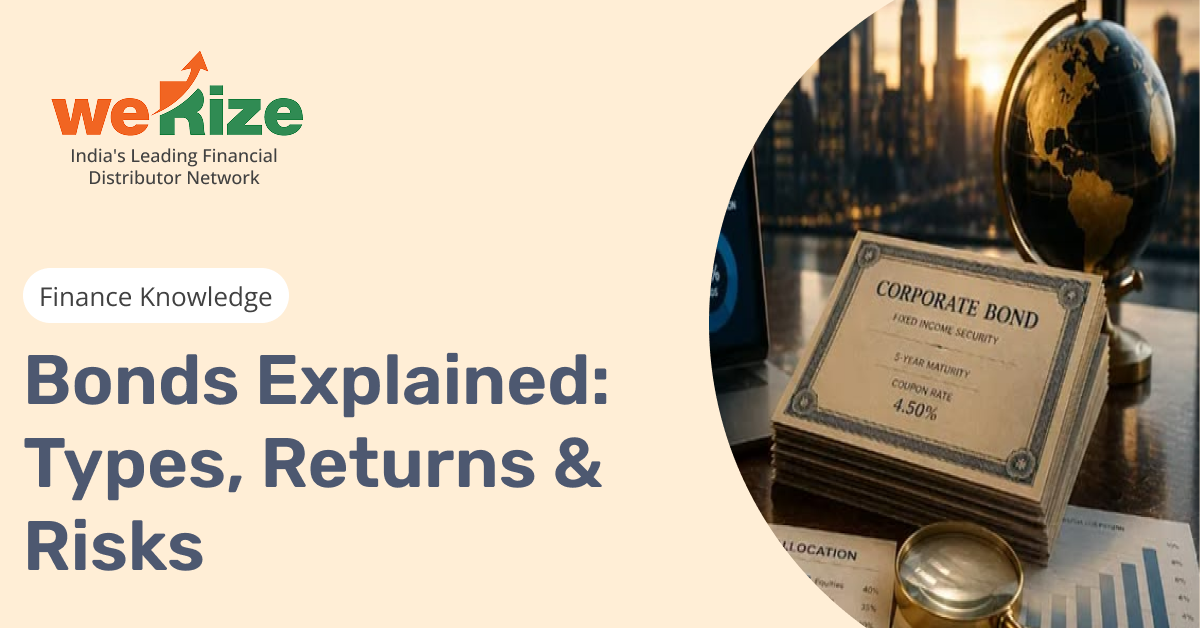
Government bonds are simple. The government borrows money from you, and in return, it pays you interest. Government securities work on the same idea. These are debt instruments issued by the central or state government. In short, you lend money, and the government repays it with interest over time.
People trust these bonds because a government backs them. Therefore, the risk is much lower than shares or mutual funds. Furthermore, many first-time investors prefer bonds because they feel safer. As an agent, this trust factor works in your favor. You do not need to convince customers about safety. Instead, you only need to explain the process clearly.
Similarly, government securities come in different types. Some pay fixed interest. Others link returns to inflation. Meanwhile, some bonds have short terms, while others run for decades. Knowing these differences helps you match the right bond to the right customer.
How to Sell Bonds in India as an Agent or Partner
Now let us answer the main question: how to sell bonds in India as an agent. The process usually starts with registration. You sign up with a financial institution, a bank, or a fintech platform that offers bond distribution. Once registered, you get access to a dashboard or app.
After that, you complete a short training. This training teaches you the bond features, the risks, and the paperwork. Additionally, it teaches you how to explain returns to customers in simple words. Once you finish training, you are ready to sell.
You then reach out to potential customers. You explain the bond, answer their questions, and help them invest. In return, you earn a commission on every successful sale. As you can see, the process is not complicated. However, it does require patience and consistent effort.
Who Can Sell Government Bonds in India?
Almost anyone can become a bond agent. You do not need to be a certified financial advisor. Insurance agents, mutual fund distributors, retired bankers, and even homemakers with good networks can start this work. Besides that, students above 18 years can also register as partners with many platforms.
That said, some basic requirements do apply. You usually need a PAN card, a bank account, and address proof. Some platforms also ask for a short online test. This test checks your basic understanding of bonds. Once you clear it, you become an authorized bond seller.
As mentioned earlier, trust plays a big role in this business. Therefore, platforms prefer agents who already have some social credibility. If people in your area or network trust you, selling becomes much easier.
Steps to Start Selling Government Securities
Let us break this down into clear steps.
- Choose a reliable platform or bank that offers bond distribution.
- Register as an agent or DSA partner.
- Complete the KYC and document verification process.
- Finish the training module provided by the platform.
- Get your unique agent code or login access.
- Start pitching bonds to your network and customers.
- Track your sales and commission through the dashboard.
Each step matters, so do not skip any of them. For instance, skipping training may lead to wrong information being shared with customers. This can hurt your reputation. Instead, take the time to learn properly before you start selling.

How Does the Bond Selling Process Work?
Once you are registered, the actual selling process is fairly simple. First, you identify a potential customer. Then, you explain the bond type, the interest rate, and the tenure. After that, you help them complete the application, usually through an app or a form.
Meanwhile, the platform handles the backend work, such as verification and fund transfer. Your main job is to guide the customer and ensure they understand what they are buying. Once the investment is confirmed, the platform credits your commission.
Besides the online process, some agents also do offline paperwork for customers who are not comfortable with apps. In such cases, you may need to visit the customer or help them at a nearby branch. Either way, your role stays the same: guide, explain, and close the sale.
Understanding Bond Agent Commission
Bond agent commission is the money you earn for every bond you sell. This commission usually comes as a percentage of the investment amount. For example, if a customer invests ₹1,00,000 and your commission rate is 0.5%, you earn ₹500 on that single transaction.
The commission structure varies by platform. Some offer a flat rate, while others offer slabs based on your monthly sales volume. In other words, the more you sell, the higher your commission percentage might get. This is often called a DSA commission model, where DSA stands for Direct Selling Agent.
Furthermore, some platforms pay commission upfront, while others pay it over time as trail commission. Trail commission means you keep earning a small percentage every year the bond stays active. This creates a steady income stream, even without new sales.
How Much Commission Can You Earn by Selling Bonds?
This is one of the most common questions agents ask. The answer depends on a few factors: the bond type, the platform, and your sales volume. On average, bond agent commission ranges between 0.1% and 1% of the investment amount.
To make this clearer, look at the table below.
| Bond Type | Typical Commission Range | Payout Type |
| Government Savings Bonds | 0.1% – 0.3% | One-time |
| State Development Loans | 0.2% – 0.5% | One-time or Trail |
| Sovereign Gold Bonds | 0.5% – 1% | One-time |
| Corporate Bonds (via DSA) | 0.3% – 0.75% | Trail |
As shown above, sovereign gold bonds often offer the highest commission. However, government savings bonds are easier to sell because customers trust them more. Therefore, many agents focus on a mix of both to balance volume and commission rate.
Government Bonds vs Other Investment Products for Agents
Government bonds are not the only product agents can sell. Mutual funds, insurance policies, and fixed deposits are common alternatives. So, how do bonds compare?
Bonds are simpler to explain than mutual funds. There are no market charts or complex terms involved. Similarly, bonds carry less risk than mutual funds, which makes them easier to sell to cautious customers. On the other hand, insurance products often pay higher commissions, but they also need more paperwork and follow-ups.
Meanwhile, fixed deposits are familiar to most Indians, but banks usually offer very low agent commissions on them. In comparison, government securities strike a good balance between trust, simplicity, and decent commission. This is why many new agents start with bonds before moving to other products.
How to Find Customers for Government Bonds
Finding customers is often the hardest part for new agents. However, a few simple strategies can help. Start with people you already know, such as family, friends, and colleagues. They already trust you, so the first sale becomes easier.
Next, use social media. A short post explaining bond benefits can attract curious readers. Besides that, WhatsApp groups are a powerful tool. You can share simple explainer messages about bond returns and safety.
Additionally, retired individuals and small business owners are good target groups. They usually look for safe investment options. As mentioned earlier, safety is a major reason people choose bonds. So, focus your outreach on people who value stability over high risk.
Tips to Increase Your Bond Sales and DSA Commission
If you want to grow your bond sales and DSA commission, consistency matters the most. Here are some practical tips:
- Follow up with customers who show interest but do not invest immediately.
- Educate your network regularly through simple posts or messages.
- Build a referral system where existing customers bring new ones.
- Stay updated on new bond launches and interest rate changes.
- Track your performance and identify which bond types sell fastest.
Moreover, always be honest about returns and risks. Overpromising can hurt your reputation quickly. Instead, focus on building long-term trust. Customers who trust you will keep coming back, and they will also refer others.
Things to Know Before You Start Selling Bonds
Before you begin, keep a few points in mind. First, commission structures can change, so review your agreement regularly. Second, some bonds have lock-in periods, meaning customers cannot withdraw money early. You must explain this clearly to avoid confusion later.
Besides that, tax rules apply to bond interest. Customers often ask about this, so it helps to have basic knowledge of taxation on bond returns. Furthermore, some platforms require you to renew your agent status every year. Missing this renewal can pause your commission payouts.
Similarly, always read the platform’s terms and conditions carefully. This helps you understand payout timelines, minimum sales targets, and any hidden clauses.
Common Mistakes to Avoid When Selling Bonds
Many new agents make avoidable mistakes. Here are the most common ones:
- Not explaining lock-in periods clearly to customers.
- Overpromising high returns to close a sale quickly.
- Skipping the training provided by the platform.
- Ignoring follow-ups after the first conversation.
- Failing to keep proper records of sales and commission.
As mentioned earlier, trust is everything in this business. Therefore, avoiding these mistakes protects both your reputation and your income. Instead of rushing sales, focus on clear communication every single time.
Conclusion
Selling government bonds is a practical way to earn extra income in India. As we have seen, the process is simple: register, get trained, and start selling. Meanwhile, your bond agent commission grows as you build trust and expand your network.
Besides the income, this work also builds your financial knowledge over time. Furthermore, it opens doors to selling other financial products later. So, if you are looking for a low-risk way to enter the finance industry, government securities are a great starting point. Take the first step today, and start your journey as a bond agent.