English


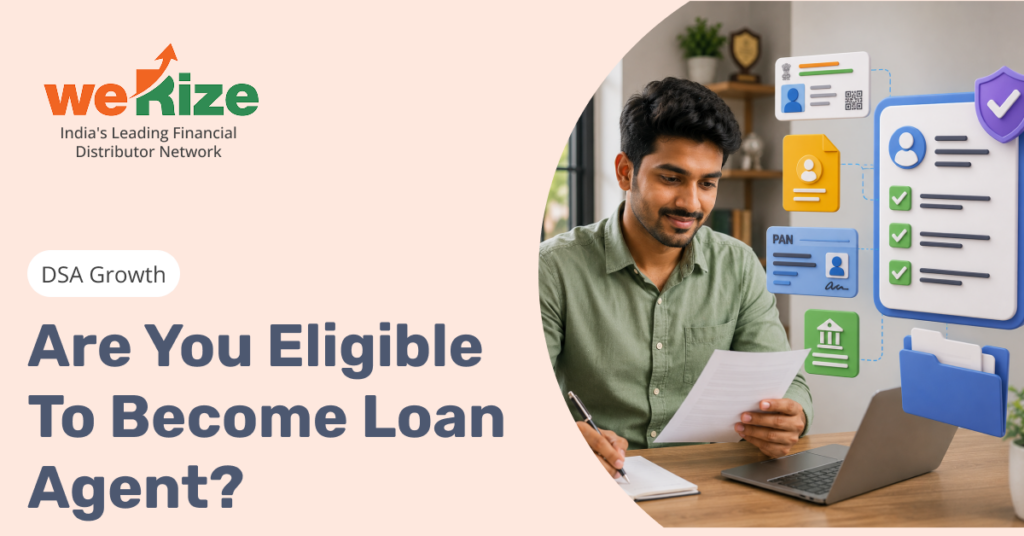







Do you want to become a loan agent in India? If yes, you must know the loan agent eligibility rules in India first. Many people want to earn money as a DSA (Direct Selling Agent). But most people do not know the exact rules for age, education, and documents. This guide will clear all your doubts. Moreover, it will help you avoid common mistakes. In addition, we will explain DSA loan agent income proof and the loan agent documents required. So, let’s begin. By the end, you will know exactly what to keep ready. As a result, you can apply with full confidence.
Who Is Eligible to Become a Loan Agent in India?
In simple words, a loan agent connects people who need a loan with banks or lenders. In return, the agent earns money as commission. Most banks and NBFCs allow both individuals and small businesses to become loan agents. Similarly, many fintech companies now welcome new agents too. However, each lender sets its own basic rules. Mostly, these rules cover four things: age, education, background check, and documents. Furthermore, some lenders prefer agents who have worked in sales or finance before. That said, this is often not a must. So, even a beginner can start this work with the right guidance.
Notably, homemakers, retired people, and students above 18 also join this field. Besides this, many people use it as extra income along with their main job. Since the rules stay simple, this job suits almost anyone who likes talking to people and explaining things clearly.
Age Limit for Loan Agent Eligibility
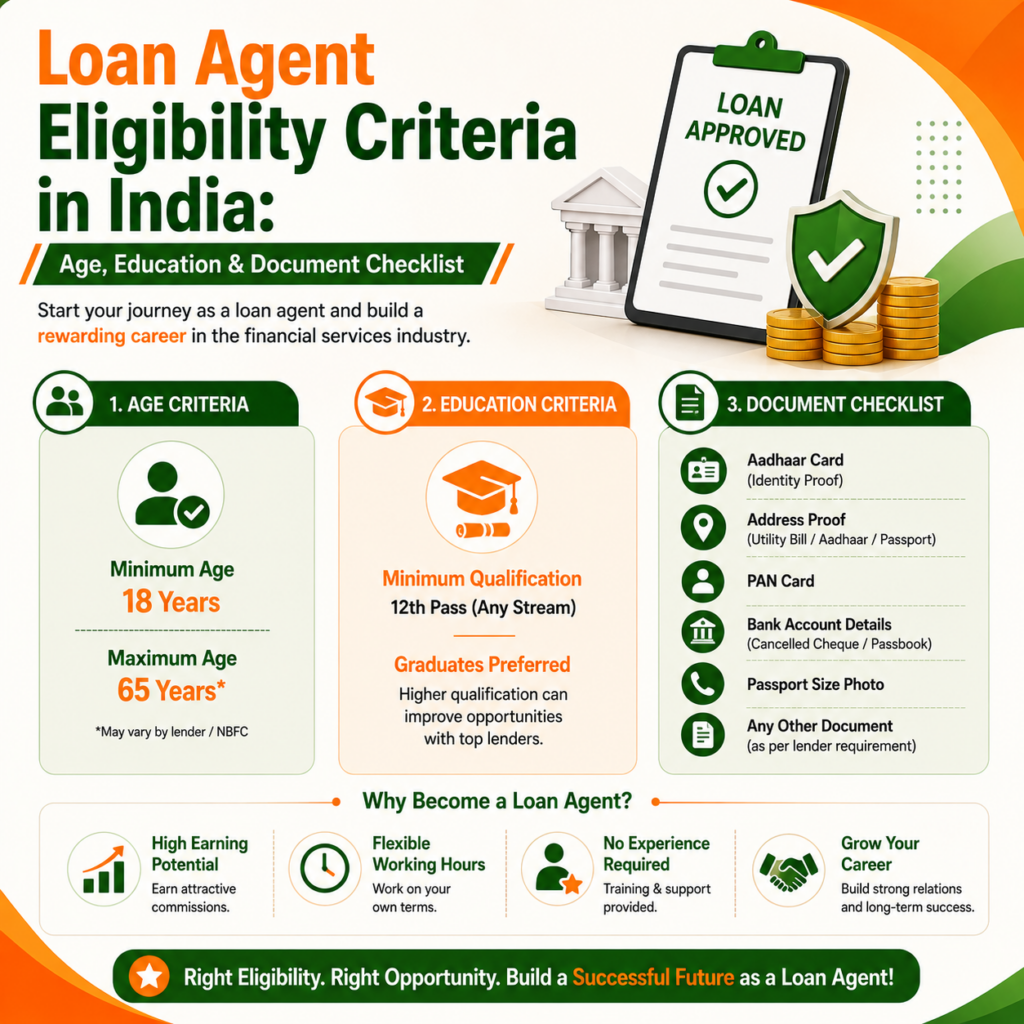
Age is the first thing lenders check. Most banks and NBFCs set the minimum age at 21 years. Besides this, the top age limit is usually between 60 and 65 years. Meanwhile, some fintech companies allow a younger age of 18 years for simple referral work. As said earlier, rules change from lender to lender. So, always check the exact age limit with your chosen partner before you apply. Also, people above 65 years can still work with some NBFCs. In such cases, extra papers may be needed. Hence, it is smart to check this early.
Educational Qualification Required to Become a Loan Agent
You do not need a big degree to become a loan agent. In fact, most lenders only ask for a Class 10 or Class 12 pass certificate. Similarly, some banks want graduates for big loans, like home loans. On the other hand, personal loans and gold loans often need only basic schooling. Further, some past work in sales or finance can help you grow faster. But this is not a must. In short, if you can read, write, and explain loan terms in simple words, you already meet the basic rule.
Other Eligibility Criteria for Loan Agents
Apart from age and education, lenders check a few more things too. First, you must be an Indian citizen or resident. Second, you should have no criminal record. Also, a clean credit history helps your application move faster. Besides this, most lenders run a KYC and background check. Notably, some also check your CIBIL score before they say yes. If your score is low, approval may take more time. Even so, a low score does not always mean a no. In addition, how well you talk matters a lot. Since you will explain loan products to people, clear and simple talk builds trust. Just as important, basic knowledge of a computer or smartphone helps you use the lender’s app with ease.
Along with this, many lenders also value local knowledge. For instance, an agent who knows the needs of their own city or town often builds trust faster. Meanwhile, being on time and honest are two things every lender wants. After all, you will handle private customer details during the loan process. So, honesty matters just as much as paperwork.
Loan Agent Documents Required for Registration
Once you meet the age and education rules, the next step is paperwork. The list of loan agent documents required is quite simple. The table below shows the common documents most lenders ask for.
| Document Type | Examples | Purpose |
| Identity Proof | Aadhaar Card, PAN Card, Voter ID | Shows who you are |
| Address Proof | Aadhaar Card, Utility Bill, Passport | Shows where you live |
| Educational Certificate | Class 10, Class 12, or Graduation mark sheet | Shows your qualification |
| Photograph | Recent passport-size photo | Used for your agent ID |
| Bank Account Proof | Cancelled cheque or passbook copy | Used to pay your commission |
| Income Proof (if asked) | ITR, Form 16, or bank statement | Shows you manage money well |
| Business Proof (for firms) | GST certificate, Shop Act license | Shows your business is registered |
As you can see, most documents are easy to arrange. However, keep both soft copies and hard copies ready. This way, your registration moves faster.
Is Income Proof Required to Become a DSA Loan Agent?
This is a common question among new agents. The honest answer is: it depends on the lender. Some fintech platforms do not ask for income proof at all. Meanwhile, older banks often ask for it, mainly for big loans. Simply put, lenders want to know that you can manage your own money well before you start earning commissions. That said, many DSA programs made for beginners skip this step fully. So, if you are just starting, check the exact rule of your chosen partner first.
DSA Loan Agent Income Proof: What Lenders May Ask For
If a lender does ask for DSA loan agent income proof, here is what they usually need. First, people with a job may share their salary slips or Form 16. Second, people who run their own work may share their ITR or bank statements. Further, some lenders accept a simple form instead of formal proof. Besides this, freelancers can also share their invoices or payment records. In case you have no formal income yet, many fintech DSA programs still let you register. Instead, they may ask for a guarantor or a smaller starting role. Therefore, do not worry if you lack normal income proof. Other options are usually there for you.
How to Check Your Eligibility Before Applying as a Loan Agent
Before you apply, it helps to run a quick check on yourself. First, check that your age falls in the right range. Next, see if your education matches what the lender wants. After that, gather your identity and address proof. Also, check your credit score online for free. Furthermore, note down any past loan defaults, if you have any. Once you finish this checklist, match it with the lender’s official rules page. This one simple step saves time. Moreover, it lowers the chance of a rejection later.
Common Reasons for Loan Agent Registration Rejection
Sometimes, applications get rejected even when you follow the right steps. Missing documents are the most common reason. Similarly, a mismatch between your Aadhaar and PAN details often causes delays. Besides this, a poor credit history can also lead to a rejection. In some cases, people upload blurry or unclear document scans. This, too, leads to rejection. Additionally, sharing wrong information during KYC leads to an automatic rejection. Meanwhile, skipping the income proof step, when it is a must, also stops the process. Therefore, always check every detail twice before you hit submit.
Tips to Complete Your Loan Agent Registration Successfully
Here are a few simple tips to help you register without trouble. First, keep all documents scanned and ready in advance. Second, use the same name spelling on all documents. Also, update your mobile number and email before you start. Furthermore, pick a lender or platform that matches your own experience level. Besides this, read the commission plan closely before you sign up. In addition, ask questions if any part feels unclear. Finally, keep a copy of your submitted form for later use. By following these steps, your registration becomes smooth and quick. Overall, a little planning goes a long way in this line of work. Once your first approval comes through, later applications usually move even faster, since most of your documents stay ready and checked.
Conclusion
To sum up, loan agent eligibility rules in India are simple and easy to follow. You need the right age, basic education, clean documents, and, at times, income proof. Moreover, most fintech platforms today welcome even first-time agents. So, if you meet the basic rules, do not wait. Gather your documents, check your eligibility, and start your journey as a loan agent today.