English










Do you want to earn money by helping people get loans? If yes, then loan consultant registration is your first step. Many people today want flexible work. They also want to be their own boss. Becoming a loan consultant offers both. But before you begin, you must understand the process clearly.
In this guide, we will explain everything in simple words. We will cover eligibility, documents, and the full registration process. Moreover, we will also compare loan consultant registration with loan agent registration. By the end, you will know exactly how to start.
What Is Loan Consultant Registration?
Loan consultant registration is the process of signing up with a bank or NBFC. Once registered, you can connect borrowers with lenders. In return, you earn a commission on every loan that gets approved. This role is also known as a DSA, or Direct Selling Agent.
Simply put, you act as a bridge. On one side, you have people who need loans. On the other side, you have banks that want good clients. Your job is to bring both sides together. You also help with paperwork and basic checks.
This career path does not need an office or a big team. Instead, you can work from home. Similarly, you can work part-time or full-time, based on your goals.
Who Can Become an Independent Loan Consultant?
Almost anyone can become a loan consultant. For instance, salaried employees often join to earn extra income. Meanwhile, self-employed individuals join to build a full business. Besides these two groups, many other people also apply.
Here are some common backgrounds:
- Insurance agents
- Chartered accountants
- Real estate agents
- Financial advisors
- Fresh graduates
- Homemakers looking for flexible income
As you can see, you do not need a finance degree. But you do need basic knowledge of loans and interest rates. In addition, good talking skills help a lot in this field.
Eligibility Criteria for Loan Consultant Registration
Before you apply, check if you meet the basic eligibility rules. Most banks and NBFCs follow similar standards. Even so, small differences may exist between lenders.
| Criteria | Requirement |
| Age | 18 years or above |
| Citizenship | Must be an Indian citizen |
| Education | No specific degree required |
| Credit Score | Good CIBIL score preferred |
| Work Status | Salaried, self-employed, or business owner |
| Product Knowledge | Basic understanding of loan products |
As shown above, the rules are simple. Therefore, most working adults can easily qualify. That said, a strong credit history helps you get approved fast.
Documents Required for Loan Consultant Registration
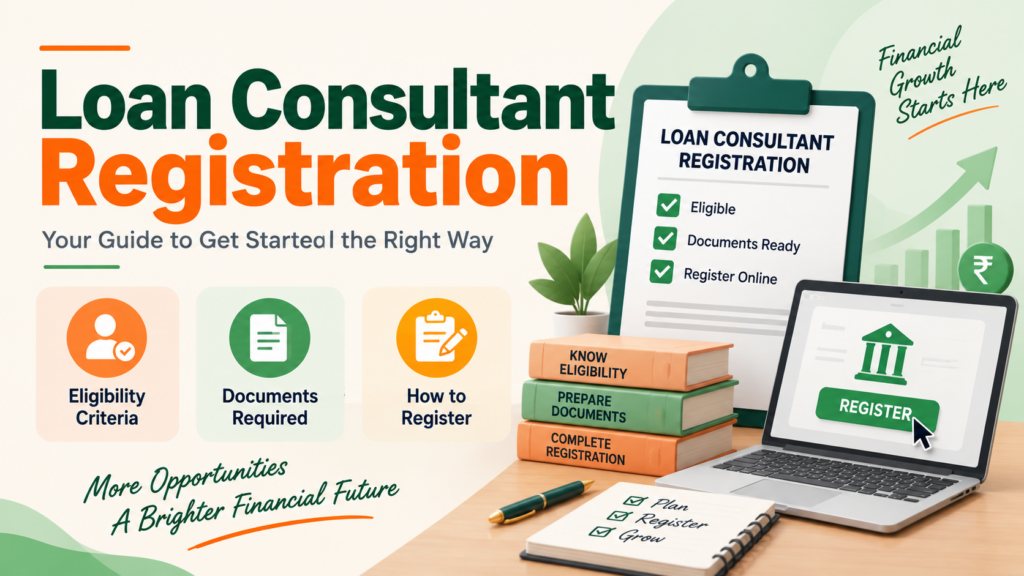
Once you meet the eligibility criteria, gather your documents. This step is important. Without proper documents, your registration may get delayed.
Generally, you will need the following:
- PAN card, for identity and tax purposes
- Aadhaar card, for identity and address proof
- Passport-size photographs
- Bank statements of the last few months
- Educational certificates, if requested
- Income tax returns, if available
- Business registration papers, in case you apply as a firm
Keep in mind that requirements may vary by lender. As a result, always check the exact list on the official website before applying. This helps you avoid delays later.
How to Register as an Independent Loan Consultant
Now let us look at the actual registration steps. The process is fairly simple and mostly happens online.
- Visit the official website. Choose a trusted bank, NBFC, or fintech platform.
- Fill out the registration form. Enter your personal and professional details.
- Upload your documents. Submit PAN, Aadhaar, and other proofs.
- Wait for verification. The lender’s team checks your documents and credit history.
- Sign the agreement. Once approved, you will receive a partnership agreement.
- Get your unique code. This code is used to track every loan you refer.
- Complete basic training. Many platforms offer free training on products and processes.
After completing these steps, you officially become a registered loan consultant. From here, you can start sourcing leads and earning commissions.
Loan Consultant Registration vs Loan Agent Registration
Many people use these two terms as if they mean the same thing. But small gaps exist between them. Understanding this difference helps you choose the right path.
| Point of Comparison | Loan Consultant | Loan Agent (DSA) |
| Main Role | Advises clients and suggests good loans | Sources leads and sends in forms |
| Scope of Work | Often wider, covering money plans too | Mostly focused on loan leads |
| Relationship | May work with many lenders as an advisor | Usually tied to one bank or NBFC code |
| Income Source | Commission or advice fees | Commission on paid-out loans |
| Common Title | Loan consultant, financial consultant | DSA, loan agent |
As mentioned earlier, both roles connect borrowers with lenders. Nonetheless, a loan consultant often gives wider advice. Meanwhile, a loan agent usually sticks to leads and paperwork.
How Self-Employed Financial Consultants Can Become Loan Consultants
If you are already a self-employed financial consultant, this change is smooth. You likely already know budgets, credit, and money plans. Therefore, adding loan advice to your services is a natural next step.
Here is how you can proceed:
Firstly, choose a reliable NBFC or fintech partner, such as WeRize. Next, complete the loan consultant registration process explained above. After that, add loan advice to your regular client talks. For example, if a client asks about business expansion, you can also suggest a suitable loan.
Besides this, you can bundle services together. This means offering money plans, along with loan advice, under one roof. As a result, your clients get more value, and you earn more income.
Benefits of Becoming an Independent Loan Consultant
There are many reasons why people choose this path. Let us look at the top benefits.
- Flexible working hours. You decide when and how much you work.
- Low starting cost. Most registrations are free or low-cost.
- No office needed. You can work from home or on the go.
- Unlimited earning potential. Your income depends on your effort, not a fixed salary.
- Wide market demand. Loan needs exist across every city and income group.
Above all, this career suits people who enjoy talking to others and solving money problems. Also, it offers a good side income for salaried workers.
How Loan Consultants Earn Income
Loan consultants mainly earn through commissions. Once a loan is approved and paid out, you get a share of that loan amount. This amount varies by lender, loan type, and loan size.
In some cases, consultants also earn extra fees for advice. This happens when they give detailed money tips, apart from loan leads. Similarly, some consultants earn bonuses for reaching monthly targets.
Keep in mind that commission rates and fees differ between lenders. So, always confirm the payout details with your bank or NBFC before you start.
How to Find and Manage Loan Customers
Finding clients is the biggest challenge for new consultants. But with the right steps, this gets much easier over time.
Consider these methods:
- Ask friends and family for referrals
- Use social media to share simple, helpful content
- Build a WhatsApp broadcast list for updates
- Attend local business events and networking meets
- Partner with real estate agents or chartered accountants
Once you find leads, managing them well is equally important. Use a simple sheet or an app to track each client’s status. Follow up regularly, but do not pressure them. Instead, focus on truly helping them choose the right loan.
Common Mistakes to Avoid During Loan Consultant Registration
Many beginners make small mistakes that slow down their registration. Avoiding these can save you a lot of time.
- Submitting incomplete documents. Always double-check before uploading.
- Ignoring the fine print. Read the partnership agreement carefully.
- Choosing the wrong lender. Research the lender’s reputation first.
- Skipping training sessions. These sessions teach useful product knowledge.
- Overpromising to clients. Never promise loan approval, as it depends on the lender.
By avoiding these mistakes, you build trust with both lenders and clients. In turn, this trust leads to long-term success.
Tips to Build a Successful Independent Loan Consulting Business
Registration is only the first step. Building a successful business takes ongoing effort.
Firstly, focus on customer service. Happy customers often refer new clients. Secondly, keep learning about new loan products and interest rate changes. Thirdly, always be honest and clear when you talk to clients.
Furthermore, use digital tools to stay organized. For example, a simple CRM tool can help you track leads and follow-ups. Besides this, build a personal brand online. Share helpful tips on social media to attract more clients on your own.
Lastly, be patient. Like any business, loan consulting takes time to grow. Nevertheless, steady effort usually brings steady income over time.
Conclusion
To sum up, loan consultant registration opens a flexible and rewarding career path. Whether you are salaried, self-employed, or just starting, this field welcomes almost everyone. Also, the process is simple, and the papers you need are easy to arrange.
By following the steps mentioned above, you can complete your registration smoothly. After that, focus on learning, building trust, and finding the right clients. In the end, your success depends on your hard work and honesty. So, take the first step today and start your journey as a loan consultant.