English

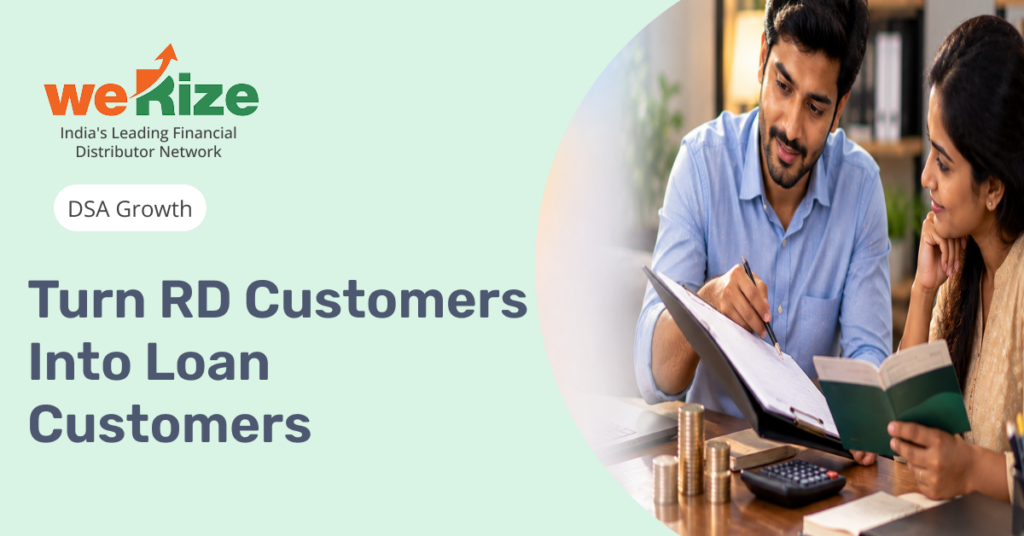

Many financial partners spend a lot of time finding new customers. However, some of the best leads are already in their own database. Recurring Deposit (RD) customers save money every month, and this habit says a lot about them. Therefore, RD-to-loan conversion is one of the smartest ways to grow your loan business.
In this blog, you will learn how the process works. Moreover, you will see how to spot the right customers and how to pitch a loan simply. Besides that, you will find common mistakes to avoid and ways to track your results.
What Is RD to Loan Conversion?
RD to loan conversion means offering a loan to a customer who already has a Recurring Deposit. In other words, you turn a saver into a borrower. The customer already trusts you, so the first step is done.
This idea is a form of loan cross-sell. Simply put, you sell a second product to someone who already uses your first one. Similarly, banks and apps use this method to grow without spending too much on ads.
For example, a customer who saves ₹5,000 every month may need money for a wedding or a medical bill. Instead of looking elsewhere, they can turn to you. As a result, you gain a loan customer, and they get quick help.
Why RD Customers Can Be Potential Loan Customers
First, RD customers show discipline. They pay a fixed amount on time, month after month. Because of this, they often have a good repayment habit.
Second, they already know your brand. Moreover, you hold their KYC details and payment history. This makes the loan process faster and simpler.
Third, they often have real money needs. Meanwhile, they do not want to break their RD early. Breaking an RD may lead to a lower interest rate, so many people avoid it. That is why a loan can feel like a better choice for them.
Besides that, RD customers usually plan for the future. Therefore, they listen when you talk about goals like a home repair, a course fee, or a business need.
Understanding the RD Customer Lifecycle
To sell well, you must know where the customer stands. Hence, let us look at the customer lifecycle of a typical RD saver.
Stage 1: Start. The customer opens an RD. At this point, they are still learning about your service. So, focus on a smooth start.
Stage 2: Regular savings. The customer pays every month. Meanwhile, they build trust in your brand. This is a good time to share useful tips.
Stage 3: Growing balance. After a few months, the balance grows. Consequently, the customer may feel more confident about money.
Stage 4: Need arises. A life event happens. For instance, it could be a festival, a wedding, or an emergency.
Stage 5: Maturity. The RD ends, and the customer must decide what to do next. Further, this is a strong moment to offer a new product.
Each stage gives you a chance to connect. Still, the best loan offers usually come at stages 3, 4, and 5.
How RD Collateral Can Support Loan Opportunities
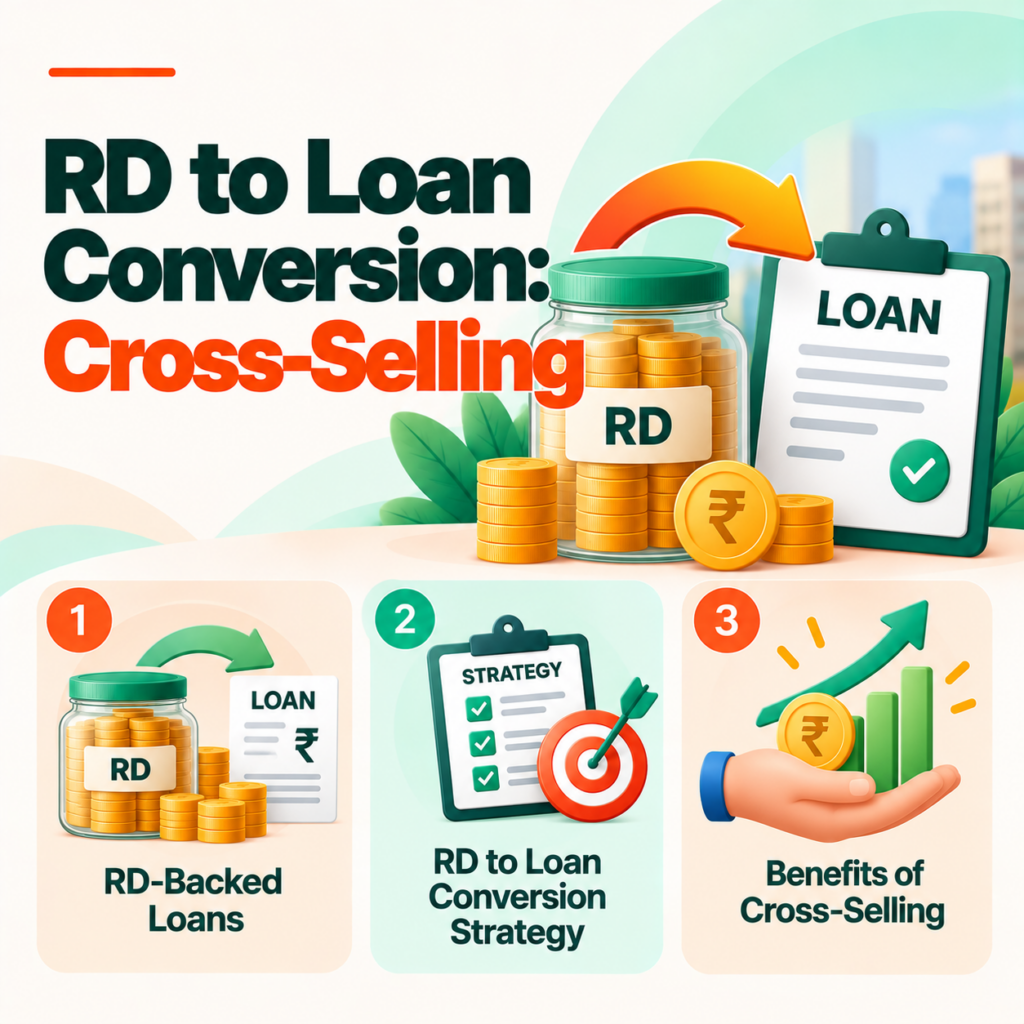
RD collateral means the RD balance acts as security for a loan. In simple terms, the customer pledges their deposit, and the lender gives money against it. Because the deposit is already with you, the risk is lower.
Furthermore, this setup can make approval easier. The lender does not need to check many other assets. As a result, the process can be quicker for both sides.
On the other hand, the customer must understand the rules. For example, the loan amount is only a part of the RD balance. In addition, the exact limit and interest rate differ by lender. Always share the correct terms before you pitch.
What Are RD-Backed Loans?
RD-backed loans are loans given against a Recurring Deposit. The customer keeps the RD running. Meanwhile, they receive funds for their needs.
Here is a simple table to explain the key points.
| Feature | RD-Backed Loan | Breaking the RD Early |
| Deposit status | RD stays active | RD closes |
| Interest on savings | Usually continues | May drop or stop |
| Access to funds | Quick, after approval | Quick |
| Savings goal | Stays on track | Gets interrupted |
| Repayment | Needed, as per terms | Not needed |
| Best for | Short-term needs | Extreme need only |
Note: Terms, limits, and rates differ by lender. Please check the product details before you share them with customers.
As the table shows, RD-backed loans protect the savings goal. Similarly, they help customers avoid the loss that comes from an early exit. That is why this product works so well for cross-selling.
How to Identify Customers Ready for a Loan Cross-Sell
Not every RD customer needs a loan today. Therefore, you must find the right people. Look at these signs.
- Steady payments: The customer has paid on time for six months or more.
- Higher balance: The RD balance is large enough to support a loan.
- Nearing maturity: The RD ends soon, and the customer may need cash flow.
- Website or app activity: The customer checks loan pages or uses a loan calculator.
- Support questions: The customer asks about early withdrawal.
- Life events: Festivals, school fees, or travel plans are close.
In addition, you can group customers by score. For example, give points for on-time payments, balance size, and activity. Then, focus first on those with the highest score. This saves time and improves results.
RD to Loan Conversion Strategy: Step-by-Step
Now, let us build a simple plan. Follow these steps in order.
Step 1: Collect and clean your data. To begin with, gather RD details in one place. This includes payment history, balance, and contact info.
Step 2: Segment your customers. Next, divide them into groups. You can use groups like new savers, steady savers, and near-maturity savers.
Step 3: Pick the right message. Then, write a short message for each group. Each one should speak to a clear need.
Step 4: Choose the right channel. Similarly, match the channel to the customer. WhatsApp, SMS, calls, and app alerts all work well. Moreover, WhatsApp feels personal and gets quick replies.
Step 5: Time your offer. After that, send the offer at the right moment. For instance, reach out a few weeks before maturity.
Step 6: Make the process easy. Besides this, keep the steps few. A long form can kill interest fast.
Step 7: Follow up. Finally, check in with customers who did not reply. A gentle reminder often helps.
How to Pitch a Loan to Existing RD Customers
A good pitch is short, clear, and kind. Above all, it should focus on the customer, not on the product.
Start with their goal. For example, say, “You have saved well for your goal. Do you need funds sooner?” This feels friendly and does not push.
Next, explain the benefit in plain words. In other words, tell them they can keep their RD running. Also, mention that the loan is backed by their own deposit.
Furthermore, be honest about costs. Share the interest rate, fees, and repayment dates. In fact, clear details build more trust than big promises.
Lastly, end with a simple step. For instance, ask, “Would you like to see your eligible amount?” As a result, the customer knows exactly what to do next.
Here is a quick sample message for WhatsApp:
“Hi Riya, your RD is doing great! Need funds for an upcoming expense? You may be eligible for a loan against your RD without closing it. Reply YES to check your offer. T&C apply.”
Best Practices for Loan Cross-Selling
- Use personal details. First, add the customer’s name and goal. Personal messages get more attention.
- Keep language simple. Likewise, avoid heavy finance terms. Everyone should understand your message.
- Respect timing. Moreover, do not send too many messages. Two or three well-timed nudges are enough.
- Offer help, not pressure. In the same way, let the customer decide at their own pace.
- Train your team. Additionally, agents should know the product well and answer questions with ease.
- Stay compliant. Above all, share only verified information. Include the needed disclaimers and terms in each offer.
Benefits of RD to Loan Conversion for Financial Partners
There are many gains for partners. Firstly, the cost of getting a customer is lower. You already have their trust, so you spend less on ads.
Secondly, the risk is lower. Because the RD acts as security, defaults may be less likely. Meanwhile, you still need proper checks and clear rules.
Thirdly, you earn more from each customer. Consequently, the value of the customer over time grows. Similarly, loyal customers stay longer and refer friends.
Besides these points, the process is faster. KYC is often done, and the payment history is known. Therefore, approval can take less time, and customers enjoy a smooth journey.
Common Mistakes to Avoid When Cross-Selling Loans
Even a good plan can fail. So, watch out for these mistakes.
- Pitching too early. A new RD customer may not be ready. Wait until trust builds.
- Sending the same message to all. However, every group has different needs. Personalise your offers.
- Hiding the terms. Otherwise, customers feel cheated. Always share fees and rates.
- Making big claims. For example, saying “instant approval for everyone” is risky. Only promise what you can deliver.
- Ignoring compliance. Likewise, missing disclaimers can cause legal trouble.
- Skipping follow-ups. Meanwhile, many leads go cold without a reminder.
- Not tracking results. Finally, you cannot improve what you do not measure.
How to Track and Improve RD to Loan Conversion
Tracking shows what works. Hence, set clear goals from the start. Here are the key numbers to watch.
| Metric | What It Tells You |
| Offer reach rate | How many customers saw your offer |
| Response rate | How many showed interest |
| Application rate | How many started the loan process |
| Conversion rate | How many took the loan |
| Time to disburse | How fast the process runs |
| Repayment rate | How well the loans perform |
Next, review these numbers every month. For instance, if the response rate is low, test a new message. Similarly, if applications drop midway, make the form shorter.
Moreover, try A/B tests. Send two versions of a message to small groups. Then, use the better one for everyone. Over time, these small changes add up.
Further, ask for feedback. Customers can tell you what they liked and what confused them. As a result, your next campaign will be stronger.
Conclusion
RD to loan conversion is a simple and smart way to grow. Your RD customers already trust you, save with discipline, and often need funds at key moments. Therefore, a well-timed loan offer can help them and help you. To become a loan agent, sell FD credit cards, & to earn more, join WeRize & start your DSA journey. Start small, stay patient, and grow steadily.
To sum up, know the customer lifecycle, spot the right signals, and explain RD-backed loans in plain words. Also, keep your messages short, honest, and compliant. Finally, track your results and improve step by step. With this approach, your loan cross-sell efforts can deliver steady growth.