English

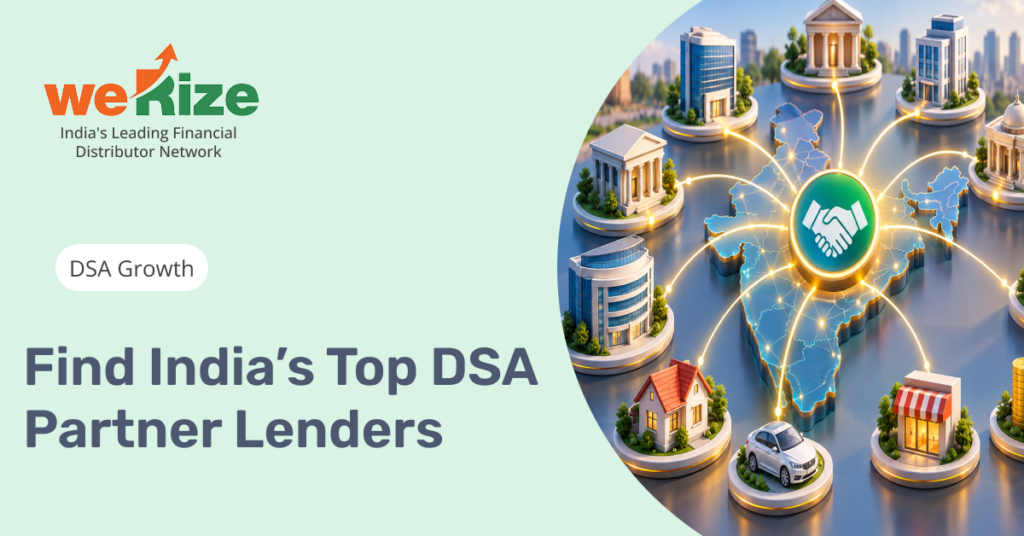





Becoming a loan agent in India has never been easier. Thanks to DSA registration for banks, everyday professionals can now earn a steady income by connecting borrowers with lenders. But first, you need to pick the right partner. This choice matters a lot. After all, your income, your growth, and your reputation depend on it.
In this guide, we will walk you through the top banks and NBFCs for DSA registration in 2026. We will also share a detailed bank DSA registration list, explain the eligibility rules, and show you how DSA registration online actually works. So, let’s get started.
What Is DSA Registration for Banks and NBFCs?
A DSA, or Direct Selling Agent, is a person or a small firm that helps banks and NBFCs find loan customers. In simple words, a DSA acts as a bridge. On one side, some people need loans. On the other side, there are lenders who want good customers. The DSA connects both sides.
Once a lender approves a loan through a DSA, the DSA earns a commission. This is why DSA registration for banks has become such a popular income option. Moreover, it requires low investment and offers flexible working hours. As a result, many people now see it as a smart side income or even a full-time career.
Why Register as a DSA With Banks or NBFCs?
There are many reasons to become a DSA. Firstly, it offers a flexible schedule. You can work from home or from your local market. Secondly, the earning potential is strong, since commissions grow as you bring in more loan customers. Besides, you do not need a big office or a large team to start.
Furthermore, DSA registration online has made the process fast and simple. You no longer need to visit multiple branches. Instead, you can register from your phone or laptop. In addition, most lenders offer training and marketing support to new DSAs. This helps beginners understand the loan process quickly.
Meanwhile, DSAs also enjoy long-term relationships with lenders. Once you build trust, banks and NBFCs often share more leads with you. Therefore, your income can grow steadily over time. In short, DSA registration is a low-risk, high-reward business opportunity for anyone in sales or finance.
Top Banks for DSA Registration in India
Many leading banks now welcome DSA partners. Here are some of the top choices for 2026:
HDFC Bank: Known for fast loan approvals, HDFC Bank offers strong DSA support and a wide product range, including home loans, personal loans, and business loans.
ICICI Bank: ICICI Bank offers a smooth DSA registration process online. Also, it gives DSAs access to a large digital dashboard to track leads and payouts.
Axis Bank: Axis Bank is popular among new DSAs because of its simple onboarding steps. Similarly, its commission structure is transparent and easy to understand.
Kotak Mahindra Bank: Kotak offers a good mix of retail and business loan products. As mentioned earlier, product variety matters a lot for DSA growth, and Kotak scores well here.
State Bank of India (SBI): As India’s largest public bank, SBI gives DSAs access to a huge customer base. However, the approval process can take slightly longer compared to private banks.
Top NBFCs for DSA Registration in India
NBFCs, or Non-Banking Financial Companies, are also strong partners for DSAs. In fact, many NBFCs approve loans faster than banks. Let’s look at some top names.
Bajaj Finserv: Bajaj Finserv is known for quick loan disbursal. Additionally, it offers attractive commission rates for personal and consumer loans.
Tata Capital: Tata Capital provides a wide range of loan products. Likewise, it offers strong digital tools to help DSAs manage their leads.
Muthoot Finance: Muthoot is a trusted name, especially for gold loans. Therefore, DSAs working in smaller towns often find good business here.
L&T Finance: L&T Finance focuses on rural and semi-urban lending. As a result, it is a great option for DSAs working outside big cities.
WeRize: WeRize supports DSAs with an easy digital onboarding process. Besides, it focuses on financial inclusion, which helps DSAs serve first-time borrowers with simple, transparent loan options.
Bank DSA Registration List: Key Lenders to Consider
If you are searching for a quick bank DSA registration list, here is a simple table to help you compare lenders at a glance.
| Lender | Type | Popular Loan Products | Best For |
| HDFC Bank | Bank | Home, Personal, Business | Fast approvals |
| ICICI Bank | Bank | Personal, Auto, Home | Digital DSA tools |
| Axis Bank | Bank | Personal, Business | Easy onboarding |
| SBI | Bank | Home, Education | Large customer base |
| Bajaj Finserv | NBFC | Personal, Consumer Durable | Quick disbursal |
| Tata Capital | NBFC | Personal, Business | Wide product range |
| Muthoot Finance | NBFC | Gold Loans | Small town reach |
| WeRize | NBFC | Personal, Micro Loans | First-time borrowers |
As you can see, each lender has its own strength. Therefore, it helps to match your target customers with the right lender.
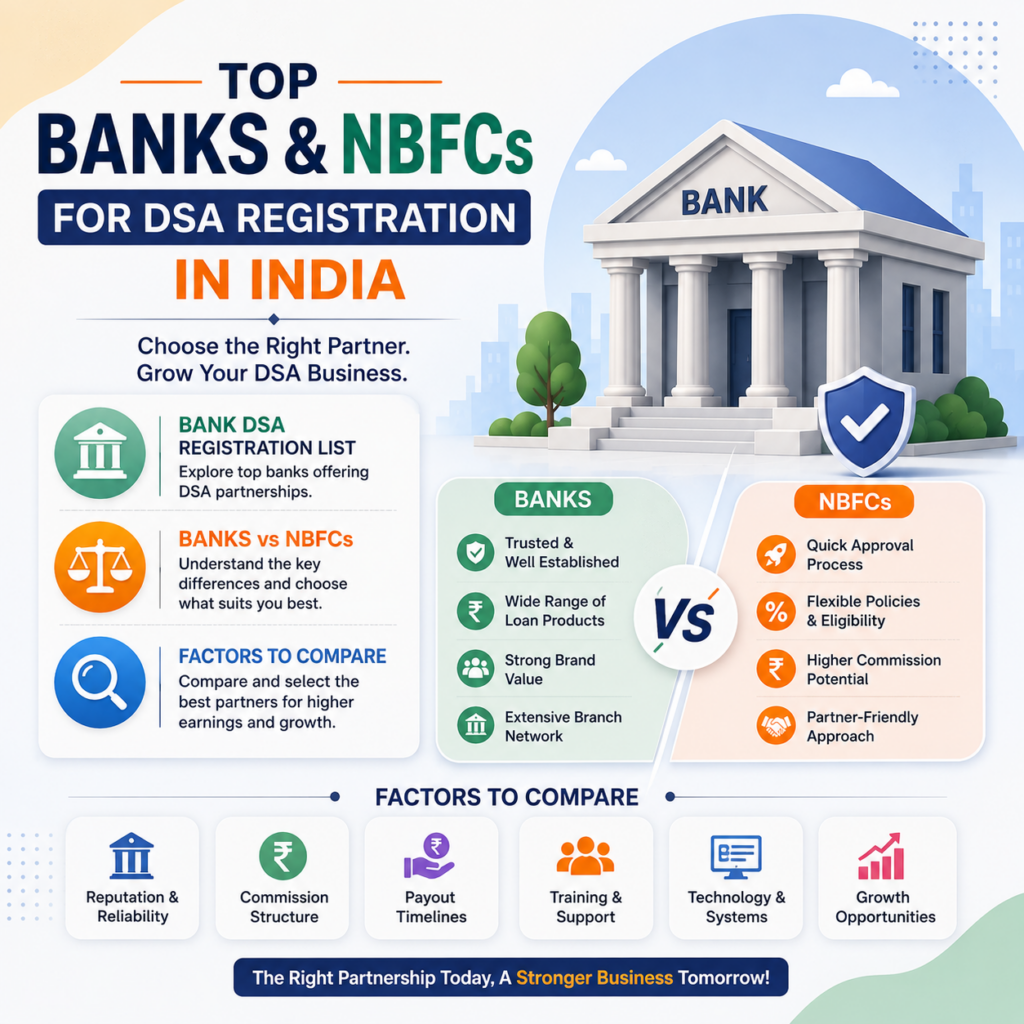
Banks vs NBFCs: Which Is Better for DSA Registration?
This is a common question among new DSAs. So, let’s break it down simply.
Banks usually offer lower interest rates. Also, they tend to have a stronger brand name, which can build trust with customers. However, their approval process can be slower. Besides, banks often have stricter documentation rules.
NBFCs, on the other hand, move faster. Similarly, they are more flexible with credit scores and income proof. This means DSAs can close more deals with customers who may not qualify at a bank. Meanwhile, commission rates at NBFCs are often higher.
In short, if you want steady, high-value customers, banks may work better. But if you want faster approvals and higher commissions, NBFCs are a strong choice. That said, many successful DSAs choose to register with both banks and NBFCs. This way, they can offer more options to every customer.
Eligibility Criteria for DSA Registration
Before you apply, it helps to check the basic eligibility rules. While each lender may have small differences, most follow similar criteria.
- You should be at least 21 years old.
- You need to have basic education, usually a minimum of Class 12 pass.
- You should have some experience or interest in sales, finance, or marketing.
- A clean credit history is often required.
- Some lenders also prefer candidates with an existing local network.
Furthermore, some banks and NBFCs may ask for a small security deposit. This is not always mandatory, though. Therefore, it is best to check with each lender directly.
Documents Required for Bank and NBFC DSA Registration
Once you meet the eligibility criteria, you will need to submit a few documents. Generally, the list includes:
- PAN Card
- Aadhaar Card or any valid address proof
- Passport-size photographs
- Bank account details and a cancelled cheque
- Educational certificates
- GST registration, if you plan to work as a firm
Besides these, some lenders may also ask for a police verification certificate. This helps build trust and ensures compliance with financial regulations.
How to Complete DSA Registration Online
DSA registration online is now a quick process. Here is a simple step-by-step guide:
- Visit the official website of the bank or NBFC you want to register with.
- Look for the “Become a DSA” or “Partner With Us” section.
- Fill in your basic details, such as name, contact number, and city.
- Upload the required documents, like PAN and Aadhaar.
- Submit the form and wait for verification.
- Once approved, you will receive login access to the lender’s DSA portal.
- Complete any training modules, if required.
- Start referring loan customers and track your commissions online.
Notably, most lenders complete this process within a few working days. However, timelines may vary depending on document accuracy and lender workload.
Factors to Compare Before Choosing a Bank or NBFC
Before you sign up, it is wise to compare a few key factors. This helps you avoid wasting time on the wrong partner.
Firstly, check the commission structure. Some lenders pay a flat fee, while others pay a percentage of the loan amount. Secondly, look at the loan approval speed. Faster approvals mean happier customers and quicker payouts for you.
Additionally, check the support system. Does the lender offer training? Is there a dedicated relationship manager? Furthermore, review the digital tools available. A good DSA dashboard can save you hours of manual tracking.
Finally, consider the brand reputation. A trusted lender name can make it easier to convince customers. In addition, always check for any hidden charges or unclear terms before signing the agreement.
Tips to Choose the Right DSA Partner
Here are a few practical tips to guide your decision:
- Start with lenders that match your local market. For example, gold loan NBFCs work well in areas with strong demand for quick cash.
- Compare commission rates across at least three to four lenders before deciding.
- Read the DSA agreement carefully. Pay attention to payout timelines and penalty clauses.
- Choose lenders that offer strong digital support, since this saves time and reduces errors.
- Build relationships with your relationship manager. This often leads to better lead sharing over time.
Overall, patience and research go a long way in this business. Therefore, do not rush into the first offer you see.
Conclusion
To sum up, DSA registration for banks and NBFCs is a great way to build a flexible, income-generating career in India’s growing loan market. Whether you choose a large bank like HDFC or SBI, or a fast-moving NBFC like Bajaj Finserv or WeRize, the key is to match your strengths with the right lender.
As mentioned earlier, both banks and NBFCs offer unique advantages. So, take time to compare, register with more than one lender if possible, and build strong customer relationships. This way, your DSA business can grow steadily over the coming years.